I know right? It’s crazy when it happens. Especially when it happens to you. Luckily, I was in the 97% of symptoms as opposed to the 3%. I just had cold symptoms and was out of it for several days in the past two weeks, but I recovered in the middle of last week and now I’m all set. It’s weird since I live a pretty safe life and have been since the pandemic started. I only go in to school once a week and now that it’s winter, I’ve hardly left the house.
I have been writing the next chapter, but obviously I was slowed down significantly by sickness. There’s no chapter or article today, but fear not! Father Hawk’s journey is still going on inside of my notebook.
I think I will write a post about my experiences after testing positive for the coronavirus. If it can happen to me, it can happen to anyone, even if you are safe.
Everyone, be safe out there! Wear you face masks and practice social distancing! It can save time and save lives!
I’ve been reading Dune Messiah as of late and it is awesome! It expands on the themes from Dune about the consolidation of power, radicalization and the ability of power to attract the easily corruptible. The writing style and tone remains, however the narrative is drastically different from Dune’s. This is a good thing since this second book’s story takes place in a new period of the Dune universe. Everything is still reeling from Paul’s rise to power and his subsequent Jihad. There’s a TON of new stuff here. It’s not a rehashing of the same stuff. There’s more mystic and spiritual stuff added in that’s a pleasure to read about.
I also finished The Great Hunt, book two of The Wheel of Time while I was out sick. Robert Jordan does not disappoint. This one is bigger and more complex than The Eye of The World. The Dune influences also become a lot more apparent in this second book.
Anyone looking for cool Dune commentary and lore deep dives should check out the YouTube channel Quinn’s Ideas. The guy is an expert on all things Dune.
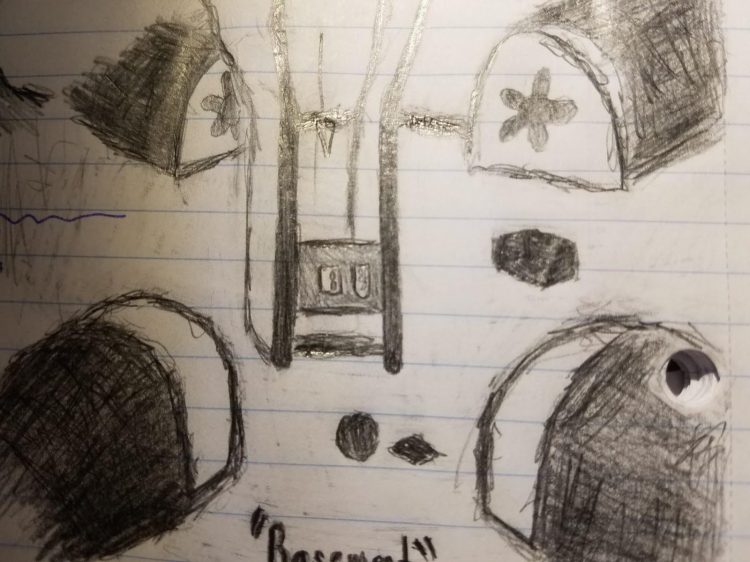
Concept sketch of Eagle’s “basement” by G.R. Nanda
“State your business with me!” exclaimed Father Hawk, breaking the nightly calm.
The wolf at the center of the advancing line squinted his yellow eyes and turned to look at the wolves on the left and the right, who slightly tilted and nodded their heads. The center wolf turned his head back to look at Father Hawk. His mouth, curving around his muzzle,upturned. The corner of his mouth to the left of Father Hawk upturned, as if in a smirk.
“State you business and if it puts me in harm, I will have to fight you!”
The center wolf’s eyes widened, appearing like glowing embers in the dark night. He raised his head back, moving the eyes back until they were small slivers of light to Father Hawk. The wolf let out a raucous later. His voice was hoarse and his laughter was grating.
“I will not submit to you,” said Father Hawk, “but I will submit to my safety.”
Father Hawk and the line of wolves both slowly advanced, inching forward bit by bit. The wolves squinted at him with baleful eyes and Father Hawk returned the stares with a threatening frown of his own.
“I’m afraid,” growled the center wolf in a deep baritone voice, “I can’t guarantee the safety of an intruder on our island.”
“Even if I tried diplomacy?” said Father Hawk, cocking his head up and to the side. He also stopped walking and raised his wings in a questioning manner by bending his wings and pointing the bend down.
“That depends on your business,” said the center wolf. He turned his head to both of his sides and raised his right paw. This seemed to indicate ceasing an advance because all of the wolves turned their heads to the center wolf and stopped in their tracks. “I’ve stated ours. Now you state yours.”
“Fair enough,” said Father Hawk. He lowered his wings. “All I seek is a passage that’s as safe as possible to Coyote’s Rock.”
“Coyote’s Rock?” wheezed the wolf closest to the center wolf on Father Hawk’s left. The wheezy wolf scrunched his eyes and left his mouth agape, wearing an incredulous expression. The center wolf continued to stare at Father Hawk, but he narrowed his eyes.
The other wolves made soft purrs and grunts of agitation and alarm as they all looked at each other, frowning, unbelieving.
“Who do you think you are?” roared the wolf farthest to Father Hawk’s right. “We take orders from Coyote King! We patrol for him! What do you expect us to do when you come to us looking for a passage to the place none must enter? His Rock is his fortress! You ca-”
“Enough!” thundered the center wolf. He turned to both of his sides, keeping a still and calm face. “We answer to Coyote.” As soon as he muttered these words to his comrades, a calm seemed to wash over them, melting their angry expressions back into stoic masks of intimidation.
“And why?” the center wolf asked Father Hawk, shaking his head in mock thoughtfulness, “do you seek passage to the fortress where none must enter?”
“Because Coyote King stole something very important to the Huntsman,” said Father Hawk. “He stole a flower that seeds the universe and that can feed……..my wife who is in great peril and pain.”
“It could save her life.”
“And if you have any shred of kindness or empathy,” said Father Hawk, feeling his heart sink at the word of his wife and the subsequent thought of his child. “-you will let me go forth.”
The center wolf let out a low and evil chuckle that rattled on until it became a raucous laugh.
The wolves at his side chuckled as well, staring at Father Hawk with bared jaws and the same old glinting predatory eyes.
“Compassion!” exclaimed the center wolf. “There is no such thing as compassion on this side of the world. We stand in the shadowlands of the huntsman’s psyche!”
“What?” muttered Father Hawk. Shadowlands? He thought that he had been sent out of the Huntsman’s shadow when he’d received a new body. He was in the grasslands! At least, that’s where he thought he was.
“I’m in the grasslands!” said Father Hawk. “The ethereal grasslands.”
“No, you’re not,” said the wheezy wolf. “At least not anymore.”
“Well then,” said Father Hawk, noticing the uncertainty in his voice as his authoritativeness was weakening, “how much do the shadowlands take up the Huntsman’s psyche?”
About as much as the grasslands, kid,” said the deep-voiced wolf farthest to the head wolf’s right.
“The shadowlands are large!” boomed the center wolf. “The shadowlands cover as much territory as there are wolves like us. And to your detriment and to the expansiveness of the Shadowlands, there…… are…………..millions of us,” he snarled.
The line of wolves savored the last words and seemed to slowly advance again and loom over the earth as if on cue.
Father Hawk didn’t want to let the wolves’ words be final.
“Hold on!” he said, trying for a bolder voice. He frowned as well. “Where exactly is Coyote Rock? Can it be found in the Shadowlands? Or the grasslands? Or is it-”
“-somewhere else,” finished Head Wolf. “Your words are not beyond us………………..Father Hawk!”
Father Hawk’s eyes widened and he froze.
“How– exactly do you know my name?” asked Father Hawk in as cool and as low a voice as he could muster.
Head Wolf hung his head back and roared with more of his raucous laughter.
“We are from the shadowlands!” he roared, letting his head loll back to eye Father Hawk threateningly. “We have lived and breathed in the shadows– the shadow of the Huntsman’s soul. We hear his repressed secrets hissing in the dark like forbidden whispers. You’ve only seen the light side of his souldom. The innocence. The infantilism. The lies.”
Head Wolf raised his front legs and stood on his hind legs, hoisting his body up and flexing his muscles. His fur rippled over them.
He raised his front limbs out across him in triumph.
“WE – are the BADLANDS!” he roared. His wolf cronies shuffled their feet on the ground, kicking up tufts of dirt. They opened their jaws, wagged their tongues and bared their fangs.
“We are the hell- the necessary forest fire and it is inevitable that we burn through souldom!” The Head Wolf’s cronies ran and jumped up and down around the head wolf. Their yellow eyes glowed brighter than ever, fuming with fury.
The center wolf turned his head to Father Hawk and looked at him questioningly.
“You don’t know where you are,” said Head Wolf incredulously. “You don’t even know where we are,” he said, pointing his front paws at Father Hawk and then at himself. His cronies moved around less and went back to looking at Father Hawk. They still shuffled around and wagged their tails and tongues.
“This!” said Head Wolf, raising his front limbs back out across him horizontally. “ -is reality! This is the storm that the Huntsman has repressed- tried to hold back. BUT HE HOLDS US BACK NO LONGER!”
His cronies all leaped up and down. Barking, they circled and sometimes started farther away, but always returned to his immediate vicinity. They growled, snarled and barked loud gruff barks that pierced the calm of the night.
“The shadowlands are the Huntsman’s true reality. The dark side he wants to ignore. You see, Father Hawk, you have been deceived. There is no righteous quest for you. The Huntsman sent you to his Shadowlands to do the dirty work he doesn’t want to do.”
“What he fails to acknowledge…”
The barking of the other wolves prompted fainter barks and howls to rise from the thick woods beyond, joining the chorus of ecstasy. Head Wolf was their leader and he was feeding them belief.
“…is that the canyons he roams, hunting after poor animals like us, are the SHADOWLANDS! The real life projection of an inner world he would rather ignore.”
The barking and howling was its loudest now, echoing, deafening. Yet, it still wasn’t deafening enough to surpass Head Wolf.
“His world is ourworld,” he snarled. “Whether he likes it or not. So what do you say?” He pointed his front limbs at Father Hawk. “Join us and chaos will reign, taking its rightful place in the world!”
“My wife,” thought Father Hawk, clenching his beak shut and frowning. He had to hold on to something. “My child………LIFE!”
“No!” shouted Father Hawk. “I’ll never join you!”
With that, he screamed in fury and leaped forward, sprinting towards Head Wolf.
Without Head Wolf moving or saying anything at all, his cronies leaped at Father Hawk and like that, they were upon him.
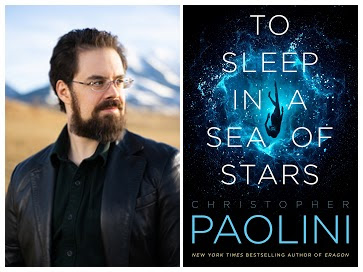
Christopher Paolini, left To Sleep in A Sea of Stars, right
Christopher Paolini has an incredible life story. He’s both talented and incredibly lucky. All successful authors are lucky, but Paolini is luckier than what is normally considered lucky for any author. That is because he wrote a novel as a teenager and then published it in his early twenties to critical acclaim and attained author stardom.
His debut novel, Eragon is a behemoth of a fantasy novel for a teenager. I think I should make that clear. As a teenage science fiction writer, I can say that achieving even the slimmest sliver of his success would be amazing and incredibly lucky for me.
I read about half or one third of Eragon when I was ten, but started some other book and so I put Eragon down. I remember liking it quite a bit, but also that I found to be a bit derivative of Star Wars. This is something that has been noted by many different people. I still clearly remember noticing that the idea of a squandered culture of trained individuals’ suddenly being accessible to a young farm boy who has to evade a large scale power that has done the squandering is right from Star Wars. To be fair, that premise from the original Star Wars trilogy is probably from something else or more than one thing altogether.
I can’t speak strongly on Eragon since I haven’t finished reading it and I was ten when I last read it. I have no clue what I would think of it now, but I’m still planning on picking it up again because of how big of a deal it is.
I just want to see what another teenager did for his debut novel since I am working on what will be my debut novel. Also, I remember reading Eragon was fun. That was my first epic fantasy.
All stories are remixes. You can’t escape tropes and archetypes. When used correctly, they are tools and not limitations or disguises. Some stories are just more overt about how much of a remix they are.
Besides, Paolini wrote this when he was a teenager. I can cut him slack on that front for being derivative of fantasy tropes.
He made it big, got a movie made out of the book and became an established fantasy author in the most unlikely period of a writer’s life: his twenties.
Since wrapping up the Eragon sequels in The Inheritance Cycle, he has been hard at work for a decade on his first science fiction work, which was released this past September. A lot of time has passed since Paolini was a teenager. He is now a seasoned writer and an adult with more experience.
I picked up his new book, To Sleep in a Sea of Stars from a library and read the 848 page science fiction epic. The word epic should be emphasized. So much of this book follows the format of an epic fantasy and is a quest story.
Science fiction has seen a trend towards fantasy in recent times. It seems to have been spurred by the New Wave breaking from the technicality and plot orientation of older science fiction and moving more towards the character based, the psychological and the literary. Dune also seems to have spurred a direction towards the epic in the science fiction genre.
The subcategory of science fiction fantasy has been established and honestly, the intersections between pure science fiction and science fiction fantasy is pretty blurred. You could argue that science fiction is a form of fantasy. There are so many fans of fantasy AND science fiction. The intersection is really blurred when readers and writers are fascinated by the fantastical and unreal of ALL forms.
Especially with the success of fantasy in recent years from Peter Jackson’s The Lord of the Rings, the Harry Potter film franchise and even HBO’s A Game of Thrones, it seems like there is more of a thirst for mythological stories.
As I’ve brushed upon in previous articles, at least part of that could be due to the lessening of religious life and spirituality.
So, given all of that, it really isn’t a surprise that science fiction has become more mythological and borrows more from mythological motifs than say Isaac Asimov did in his sci-fi stories.
However, there is no lack of scientific research and science based worldbuilding. At the end of the book is a whole scientific paper on quantum physics and the science of the FTL interstellar travel of the story.
In the extensive index at the end of the book is actually the name of a character from the Inheritance Cycle who serves as an easter egg. However, where the definition or otherwise description should be is a note that tells us that the input cannot be identified. Cool stuff.
Little nods Paolini has planted in this book, many of which are to various parts of sci-fi history include a fictional culture named after the famous American science fiction writer Robert A. Heinlein as well as the name drop of the “hunter-seeker” a tiny floating remote controlled killing device from Dune whose purpose has not been changed for the Fractalverse, the universe in which this book takes place.
It seems as if Brandon Sanderson and his Cosmere is rubbing off on the world of science fiction and fantasy. To Sleep in a Sea of Stars is the first book in a shared future universe called the Fractalverse.
Unlike the Cosmere, the Fractalverse stories take place in the real world or universe, except this is a projected future version of the universe.
The scope of this universe in TSIASOS is staggering. It utilizes the familiar space opera tropes and concepts of the interstellar government and the presence of interstellar corporations monopolizing on resources and endeavors. The Foundation series by Isaac Asimov and the Dune universe by Frank Herbert are some of the earliest space opera endeavors like this. Like Foundation and Dune, To Sleep in a Sea of Stars portrays a galaxy with many different colonized planets and the problems arising from selfish corporations.
While Paolini’s science fiction book is in many ways a really good science fiction novel it is no Dune. While the mythological storytelling here is bound to send ripples through sci-fi, Paolini’s entry into the genre is not on a Sanderson level of groundbreaking. Instead, this is a great showcase of worldbuilding, unique and creative takes on space opera concepts with some of Paolini’s own sci-fi concepts, as well a promising universe with many potential stories to tell.
Hopefully the experience Paolini attained by writing this book can help him in writing even better science fiction.
The first few chapters of this book seem to cover the major events of the entire Alien movie, but it takes the 1 hour and 57 minute story and condenses it. This isn’t a ripoff, but so much of what happens in the overall plot of that movie occurs in mere chapters.
Kira Navárez is a very well realized character. Christopher Paolini is very good with female characters and there are other female characters other than her in the book.
Eragon didn’t have many female characters, but it seems like since his teenage years, Paolini has become more experienced. He’s an adult married to a wife. It seems like the life experience that has been gained since Eragon has given him more insight into female characters and more prolivity to writing them in the first place.
I will say that as a teenager, I am in teenage Paolini’s boat. Writing female characters is hard for me right now, so I naturally write more male characters in 2200 Blues.
Readers will immediately empathize with Kira as she is thrust into a happy circumstance. She becomes engaged to the man she’s in love with while working with people on an important mission as a xenobiologist.
A tragic accident results in the alien that she unintentionally brought on board the ship killing all of her creamtes, including her fiance. She is the only survivor and the xeno has latched onto her body, forming a symbiotic relationship with her.
We start off with the protagonist given a blissful circumstance and then having that circumstance ripped away and replaced by a much uglier one.
Following her tragedy, Kira has to deal with corporate hassling. Eventually, she escapes onto a spaceship that serves as this book’s Prancing Pony or Mos Eisley cantina. Here, we learn of the many different kinds of people who exist in the galaxy and partake in interstellar travel. We are introduced to Numenists, a very interesting culture of number worshipping humans, constantly looking for the ultimate number.
Mental health is explored in depth in this book, to my immense pleasure. Throughout the story, Kira has to learn how tos stop beating herself up for the past errors, which were in her hands or otherwise. Gradually, she moves towards acting and thinking in the present, reaching out to others and striving for a better future.
There is a great sequence in this book where Kira and her newly adopted crew travel to a planet with an extremely unique topography and hemisphere. The adjustment to this planet is explained very well and is honestly one of the coolest sci-fi scenes I have ever read in prose.
SPOILERS
At the 3rd act of the book is an amazing Lovecraftian encounter with a space monster that the plot has been gearing up to. It’s connected to the Soft Blade (the name for the xeno) and its effects on Kira. This is the climax of the story and it is when Kira undergoes a physical and mental catharsis. It is here where she truly stops beating herself up over the past and moves on.
It is a wonderful climax and fictional catharsis.
NO MORE SPOILERS
The most jarring thing about the book is its pacing. While it doesn’t always detract from the quality of the story, it does sometimes take away from the propulsion of the narrative and action. Sometimes, I felt like I was just waiting for things to become faster and return to the action of the story. However, there are many great aftermaths here, following an action peice or other major plot event. When the story slowed down in many instances, Paolini took the time to depict the psychological repercussions of the plot on the characters, specifically Kira.
This story is ultimately about overcoming tragedy and trauma. It’s about rising above pain and anguish– embracing it so that it can even be used as a weapon. That’s clearly illustrated in how Kira uses the Soft Blade, an entity which initially caused her tragedy.
For the same reasons that the story of a traumatized Bruce Wayne turned Batman connects with us, the story of Kira Navarez does as well.
This is a really cool sci-fi story with great thoroughly explained concepts and a very detailed universe. The worldbuilding is top-notch, delivering you a wide scope through the eyes of the protagonist making her way through the narrative while also maintaining the idea that there is actually so much more in this world outside of the pages. The exposition and word building information is delivered seamlessly with the story without overwhelming or boring the reader.
The tone of this space opera harkens back to the optimism of writers like Isaac Asimov. This is not a warning like Dune. Rather this is purely a celebration of innovation and space exploration. Paoloni uses the romanticism of fantasy to imbue his science fiction with optimism for innovation.
This is a good space opera and a great first sci-fi novel. I am looking forward to more science fiction stories set in the Fractalverse. Hopefully, the movie adaptation that’s been announced turns out to be good. Hopefully, Paolini’s participation with the script makes it as great as possible.
Concept sketch of Eagle’s “basement” by G.R. Nanda
“You’ve worked hard,” said the huntsman. Father Hawk could see his large blue body looming high in the black expanse and hear him as well. However, Father Hawk couldn’t see himself and he certainly couldn’t hear any sound he would normally create whether that be his feathers shifting against each other or his own breathing.
What Father Hawk could tell about himself was that he was worn down and tired. He felt disjointed. His perception felt fragmented. He was looking up at the huntsman from many different angles below.
Even though he felt no body of his, he felt some sense of direction in that he felt as if the black expanse was an oppressive weight pushing down into a thin place of existence– in other words, him, Father Hawk.
“You’ve done a lot, my boy,” croaked the huntsman. He sighed and looked up at – at nowhere really in the black expanse. The huntsman’s long silvery beard now dominated Father Hawk’s view, shimmering with a bright glow as it quivered and moved with the huntsman’s head.
“You see,” said the huntsman in a steadier voice. He still looked up, away from Father Hawk. “When I hunt the animals of the canyons, I get to know them very intimately. It’s the only way, really. Only way to track them down is to understand their life and where it will take them.”
“Therefore, I love them dearly. I see them for their unique habits, movements and characteristics. It makes me love them for who they are.”
“The threat I pose in the canyons forces them to move and work and burrow and sometimes build. I am their hardship which forces them to grow. I am the pressure which builds them up.”
“So I……………am their father.
“The huntsman was quiet for a bit, so his words settled in on Father Hawk, allowing him to register their weight. They seemed to be sinking in the huntsman’s mind too, for he was looking up with a thoughtful and open-ended expression. His eyelids were open pretty wide, but they were crinkled at the edges towards his ears. His pupils dropped down in weariness and his eyelids drooped. His mouth opened a crack and his dark blue lips sagged. There was a soft rushing sound as if a wind were rustling grass. It was the huntsman inhaling through his nostrils.
Little silver strands of glowing hair rustled and revealed themselves to Father Hawk inside of the huntsman’s nostrils before disappearing with their layer into darkness.
They rippled. Parts glowed in Father Hawk’s view before darkening and being replaced by a luminosity that made its way to the right. Moving. Changing. The light rippled from side to side.
The huntsman’s large mouth opened wide, letting a gaping black hole emerge, almost as black as the expanse around them. He sighed, letting out a noise like a roaring hail of a waterfall frothing with foam.
The black and empty void of a world heaved forward. Though Father Hawk couldn’t feel his own body, he felt a rising– pushing weight from below. He felt like he was being impelled towards the huntsman, moving closer to him, even though he wasn’t.
It was the force of an emotion turning into a thought about to burst into speech. In the form of a question.
“You’re my father?” asked Father Hawk. “Are you my father?”
The huntsman looked down at Father Hawk with a smile and eyes that crinkled in the smile. He chuckled loudly. The noise seemed to consume the space of the void and in turn was consumed by the vacuum of the space, made whole and constant.
“Why yes,” he grated. “The father of Father Hawk! Now isn’t that quite the enigma?”
Enabled by the words he’d spoken, Father Hawk felt the new power of being able to summon a voice in the void, to speak more.
First, he chuckled. Then he spoke:
“Yeah. I mean, I guess. I never thought of having a father. I was a god so I assumed that the universe was made for me instead of the universe having made me.”
“Ahhhhhhhhh……….,” said the huntsman. “That is where you are changing. Once you are able to willfully subject yourself to your world– your environments, subject yourself to its legacy. Subject yourself to me!”
There was a thundering in the void that punctuated the huntsman’s last words. A deafening crackle followed by many echoes that seemed to bounce across the void.
“Ahhh……….,” repeated the huntsman. “I see what is happening. Keep listening, Father Hawk. You are like the phoenix, sent to oblivion by the fiery throes of death and then reborn by the fire. We are in oblivion– the shadow of my psyche and soul. You are reborn only through self transformation.”
“Self transformation starts with subjection. Subject! To responsibility. Subject yourself to your limitations. Do you realize what I am saying?’
A thin web of blue lightning coursed through the black void, first appearing as random glowing lines, then edging down around the huntsman in larger beams of jagged light.
They sizzled and electrified wherever the final ends touched in the destinations of their glowing path. Father Hawk knew this because he could feel wherever they touched. Wherever the lightning struck, the sensation of touch was returning to Father Hawk. It was almost as if he had………………. a body.
Shocking white beams coursed through the space in jagged shapes, dodging the huntsman. Auras of blue light emanated from the jagged white paths, creating edges and an outline. All of the lightning clustered together in a bundle of blue fraying, spindly, twisting and morphing electricity. Lightning struck from many different directions – up, left and right. It was a tapestry of change and twisting that all ended up in the same focal point. It was a net that had been cast down from above and situated like a hemisphere.
“Yes, yes,” muttered the huntsman. “You are changing, Father Hawk! Change is how you are reborn from the darkness and from death.”
At the focal point of electricity, Father Hawk could finally feel. The lightning was slowly materializing into a shape. Beams of light were joining into glowing white lines that smoldered and produced steam as they were formed out of the heat and the light.
Wherever lightning kept striking, thunder crackled, louder than ever. Faster than ever. They were like echoing drums that beat faster and faster in a victorious melody that was escalating to-.”
“My son is born,” said the huntsman, looking down with half-closed awestruck eyes.
Escalating to Father Hawk’s return. The storm of lightning was bequeathing a body for Father Hawk. Out of the focused bundle of electricity, Father Hawk was given smoldering limbs to wade in the blackness. And eyes to look out of at the storm of lightning cascading around the Huntsman like hailing rain that brushed and bounced off of his looming blue body.
A chest, Father Hawk’s head and limbs appeared. The lightning kept coursing down even though Father Hawk was now able to move his wings in front of him to his chest. He could barely make out his feathers when glowing light dripped off of him like magma and steam arose wherever the lightning bolts danced on his body.
“I knew it!” shouted the Huntsman over the roar of thunder. “I knew you had it in you! You called the storm with your understanding. Now, since you have a body, I can cast you out of the shadow of my soul!”
“Return to the grasslands, Father Hawk! Do not fear pain! Subject yourself to it. And you may become GREAT!”
With that, the Huntsman pushed his hands down, sending a wave through the void that pushed Father Hawk in his glowing hot body and the swarming lightning away. Father Hawk was pummeled down so hard that he couldn’t even flap his wings.
“REMEMBER!” boomed the Huntsman as his voice grew ever fainter and his image was blocked out by Father Hawk’s trailing electricity.
“I only spoke the words. It was you who did the changing!”
The world roared around Father Hawk. He crashed into dark waters that submerged him in shallow ground. The cold shocked him and dampened the light. The dying embers of light illuminated bubbles arising from Father Hawk’s sizzling body.
Struggling for air, Father Hawk pushed himself up with his claws. He emerged with his torso sticking out of the pool, dripping water and steaming.
His heart pounded and his beak was agape, panting for air.
The grasslands were darkened by the night sky. In front of him was the reflection of the glowing white moon, rippling in the pool due to Father Hawk’s emergence.
He waded through the water and found that the ground was inclining. He quickly made it to the shore, a crusty material of damp dirt and stone. Ahead of him was a small clearing and short grasses, shrubs and bushes. At the circular edge, the clearing gave way to a grouping of piled rock boulders directly ahead. They were surrounded by twisting vines that wrapped around the rocks and the bark of trees with masses of fluttering green leaves. Their broccoli shaped heads intersected each other and formed a wall Father Hawk could not see through.
Even in between tree trunks and vines was a shrouded darkness with only faint figures of even more trees.
Father Hawk’s breathing had slowed and his panting had receded into a more even and calm breathing.
While the light had faded from his body, little sparks and tailings of electricity remained, dancing across his body. They skidded across his feathers, disappearing and then suddenly reappearing somewhere else on his body. They gradually became smaller, narrower and fewer. Their incessant buzzing grew quieter.
His body was the same as before, but with none of the cuts, bent feathers, grime or other injuries sustained on his previous time in the Holy Grasslands. He was also more fit. He had more fat under his feathers and patting himself, discovered harder muscles.
Countless and myriad white stars dotted the sky, but the Huntsman wasn’t to be seen amongst any of them.
Father Hawk was on his own.
Several stealthy wolves emerged out of the woods, slipping around tree trunks, under vines and over them.
They were all furry and had muscles popping out from under the fur. Their worming backs, underbellies and chests were bulky, the moving muscles rippling under the dark gray fur. Meanwhile, their legs were angular from strong solid bones and narrowed on the way to their paws. Their ears were tall and pointy and underneath, their eyes glinted yellow with a predatory hunger.
Three emerged from the left, one from straight ahead and two from the right. The closer they moved to Father Hawk, the more they advanced in a circular line, closer to each other than they initially were.
They snarled and growled in low grating voices. They bared their sharp triangular teeth and fangs, licking them with long tongues.
Father Hawk stood still, frowning.
Was he ready?
If he wasn’t ready now, he never would be ready.
He would submit himself to any challenge that lay ahead here on out.
Father Hawk crouched and raised his wings, ready to fight the monsters ahead of him.
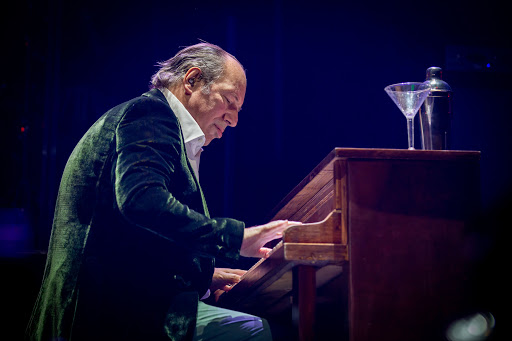
It’s interesting that Hans Zimmer has worked on soundtracks for stories about male protagonists/heroes who were born into families of privilege and power, but after a tragic death of the protagonist’s parental figure(s) and a subsequent destabilization of the hero and his family’s position in the setting they once had a reign over, the hero goes through a transformative journey that will culminate in them claiming their family’s inheritance and fulfilling their role in their setting. We see this in not only The Lion King, but also in The Dark Knight movies, Batman V. Superman and in the story of Dune, the book which is getting a soundtrack by Hans Zimmer for the 2021 film adaptation. Simba, Bruce Wayne and Paul Atreides all have a LOT in common. Perhaps Hans Zimmer’s gravitation towards these kinds of stories has at least a little to do with his own father’s tragic death when Zimmer was just a young boy.
Concept sketch of Eagle’s “basement” by G.R. Nanda
Father Hawk gathered himself again and eventually walked off the stinging pain. His right leg had been sprained near the claw in his fall. He didn’t know how he was going to do what he had to do.
He had flown high up above and had seen that the ravines and rivers of water had led to the mountains and canyons close to Coyote’s Rock. If he moved through the waters, he could get to the higher elevation where he could find the beady-eyed eagle.
He knew where the water was. It was wherever that gurgling was coming from. He couldn’t fly to try and see where exactly it was because he was too weak. His left wing was stiff from the fall and he didn’t dare touch or move it for fear of what might happen if he did. His right leg was too hurt to try and kick off for flight.
So, he walked around, limping, trying to avoid putting too much pressure on his right leg. He walked around in the grass, thinking of what to do. The grass was shorter than what it was near the gurgling.
He tried extending his left leg, standing on the tips of his claws, to peer over the grass, but it was to no avail. He could only see the really tall grasses where he had been just minutes ago.
He had to walk there.
But what if there was some other large animal, perhaps another bison to pummel into him? What if the same obstacle returned?
He had to protect himself.
But what if he could use the bison to his advantage if it returned?
What if he decided to use a bison to get into the water? First, he would have to figure out where the water was coming from. Then, he would have to wait for a bison to be heading into the direction of the water. If he hung on and flung himself off when he got to the water, or at least near enough, he could land in the water and then he could head forward, towards the mountains and canyons.
He first needed to protect himself and make it so that he could safely travel without further harming his injured body parts. He was already weaker than before so he needed something to work as a brace for his movement.
Father Hawk ripped off several strips of grass in front of him. He had seen Mother Hawk use braces around her legs to make it easier to walk when she was still carrying an egg that was yet to be laid. The egg had been too heavy for her legs, so she used stone braces out of asteroid rock built by a badger blacksmith to help her walk.
Father Hawk clumped together a group of ripped grasses and wrapped them around his left leg and tied them.
He walked a few steps, still limping off of his left leg, but not as much. He decided to continue walking, trusting that his grass cast would protect his leg for the time being.
Looking at his wing, he cringed. Thinking about how he was going to deal with a stiff wing made him reluctant about his journey.
He tried to move it slightly to the back, but a piercing pain shot through the wing. Father Hawk winced and brought his wing back to its original position, bent at the center, the end sticking back and extended outwards.
What was he going to do about this?
He would have to fold it somehow.
The more he thought about it, the more it seemed like there was only one somehow.
He would have to move it as much as he could until it was folded and out of harm’s way.
He cringed in anticipation and shuddering all over, slowly lowered his wing.
Pain seared all over the wing and his feathers trembled from him shaking. But he kept at it and then pressed his wing close to his body. He decided to take the wing and bend it closer to him.
Then, he clamped down on that wing with his right wing and held it there. Slowly the pain subsided and then that wing became stiff in its new position. He would have to keep it there for a long time.
He walked to the right, looking for a patch of ground with twigs and sticks. He brushed through the grasses until he got to it and grabbed the thickest and longest stick he could find. It was a rough light brown thing with splotches of lighter brown peppered in the exterior.
The whole surface was wider and taller than him. He could firmly hold it by the side while it loomed over him. It was also light enough that he could also pick it up and hold it horizontal to him.
It would have to do as a raft for now.
He clenched his beak tightly and walked through the grasses, following the incline of hightening grasses, bracing against his pain so that he could get to the bisons.
The winds rustled the blades of grass and for a long time that was all that he could hear. He would have to keep following the heightening grass in order to get to the bison awaiting him.
He walked forward and the grasses in front of him started to loom higher and higher until he had walked to a point where they were taller than him.
He kept walking, wincing whenever his right leg or his left wing coursed with pain. He told himself that he would just have to walk a bit further, grab onto a bison and once he was flung into the river by the animal’s horns, he could splash onto the river with his log and laying down on it, he could rest as the current of the water did the moving instead of his legs.
When the grass was so thick and so tall that it all nearly blocked out the sky, Father Hawk’s left wing stabbed with so much pain that he had to stop. He squeezed his eyes in anguish and gasped. He didn’t dare move anything, especially the left wing which hurt so much.
“It’s only a break,” he coaxed himself when thoughts of guilt at his pause entered his mind. “Then I’ll keep going for long, like before.”
Without warning and before Father Hawk had enough time to react and plan his path, a roar of oncoming rustling grass sounded ahead of him. A bison was hurtling towards him.
When Father Hawk opened his weary and fearful eyes, the bison grunted loudly and a thick clump of grass before him pressed down. Out of the fallen clump, a blurry and furry mass of speed and power slammed into Father Hawk. In the chaos of movement and propelling force, Father Hawk was a flattened object in the wake of the beast, stuck to the beast’s head himself.
Feeling himself slip away and fearing his proximity to the stampede of powerful bison limbs that awaited him if he fell, Father Hawk lunged. Amidst the disorientation, Father Hawk lunged up with his wings and clasped onto the bison’s blurry white horns.
From there, Father Hawk felt himself shaking and swinging to and fro from the horns he hung on to desperately. The bison snorted, sending hot air that pushed off Father Hawk’s legs only to have them slam painfully onto the bison’s head. The animal was shaking its head, trying to rid itself of Father Hawk. So he swung to and fro seeing only blurs of brown fur, white horns, green grass and blurred slivers of blue sky.
Pain and adrenaline consumed him, making him feel like his bones were on fire while his heart pounded and his limbs were jittery with the need for movement.
The twine Father Hawk had used to strap the log to his back still hung on, but he could feel it sliding. And if his sensations were correct, slipping bit by bit. Meanwhile, the log pounded itself on Father Hawk’s back, causing him even more pain.
“It’s either now or never,” Father Hawk realized even while he was swung side to side. He had to let go so that he could fall into the river and float away from the grass. If he was too late and the bison hurled him away, then Father Hawk would be even more hurt. With more pain, Father Hawk might not be able to make another trip to the bison territory.
He focused as much as he could on finding the blue water of the river as he swung, and his view moved back and forth from the left and right of the bison. He saw the bright baby blue of the sky for sure. But the blue of the river was hard to spot. However, he could hear what he was looking for. As he jerked to the left and up over the bison, he heard a sudden rush of water gurgling and streaming, only to have that sound disappear as soon as he was flung the other way to the right over the bison’s head. As soon as he was flung back to the left, he could hear the water’s sounds again.
He had to drop his hands. He had to fly into the water. He had to let go.
But when? It was so hard to plan something like this when he was constantly being jerked around like a ragdoll on the bison’s white horns. How could he plan? How could he see where he had to go when he could barely make out anything that he could see?
He would have to do it. He had to trust himself. Or else he would never make it out alive again.
He jerked to the left. He did nothing. To the right. He did nothing. To the left. He did nothing. To the right. He did nothing.
It was now or never.
He jerked to the left. He did nothing. He jerked to the right. He did nothing.
He was going to let go.
He jerked to the left. He did nothing. He jerked to the right. He did nothing.
Just about………………
He jerked to the left. He did nothing. He jerked to the right. He did nothing.
Now……………….
He jerked to the left. As soon as his body was flung up and far away from the bison, Father Hawk let go of its horns. The bison gave a grunt which died away from his ears as Father Hawk shot through the air, propelled by the thrust of the bison.
Father Hawk saw nothing but a blur that got even blurrier than what he was seeing before. Swaths of blue mixed in with swaths of green. Air pushed against his skin. As he whirled in the air, his head throbbed with the terrible ache of flight. Father Hawk could no longer see the bison.
His beak was open and as soon as his shock lessened, he could hear his own hoarse screaming.
The wind became louder than his screaming at intervals.
A blue strip of flowing water appeared to him, disappearing under the surrounding panorama of green grass and blue sky as he spun around. As soon as it appeared, it always disappeared, replaced by green, light blue and slivers of brown dirt.
In seconds, Father Hawk felt a crushing pain on his stomach. There was no more panorama. Only the dark brown of dirt. It was under him and in his eyes. He blinked furiously, trying to remove the stinging dirt from his eyeballs. He couldn’t use his wings which were hurting at every feather, nerve and bone. In fact, every single bone in his body throbbed and felt like they were shattered.
Father Hawk could hear rushing water. It was louder than ever. But this time, it came from the right.
It filled his entire right ear, blasting it with the loveliest sound Father Hawk had ever heard. He had never felt this ecstatic or relieved about a sound ever. He had never felt this happy while simultaneously hurting so much. Then, again, Father Hawk had never really had to work for much in his life. Hardship was something he could usually fly away from.
Father Hawk still felt the weight of the large log on his back. What a relief. If he had landed on his back, it would have shattered.
Mustering a final exertion and energy, Father Hawk grunted and shifted his weight to the right, to the water. He felt the dirt incline down to the right. He pushed gently with his throbbing claws and he slid down on the moist dirt. He no longer had to move his own muscles. The closer he got to the water, the wetter and slippier the dirt got. It worked like a lubricant that pushed Father Hawk down.
When he could see the blue water lapping out of the corner of his eyes, he shifted enough so that he flipped over and the log on his back touched the dirt that met the water. He was still for a moment. The afternoon sun shined on his eyes, forcing them closed and the water lapped at his ears.
Water seeped under Father Hawk’s back and took him away in its current.
As he floated away down the river on his log, Father Hawk saw black and slipped into a fatal unconsciousness.
Concept sketch of Eagle’s “basement” by G.R. Nanda
2200 A.D. Atlantic Tribe, Desolate Plains of the Atlantic
As the windstorm died down, the old man cleared his throat and slurped on something. There was scattered shuffling of limbs and mutters outside of the egg shell in the crowd.
Nickel had resorted to slumping at the bottom of the egg, keeping his head and back laid along the bottom while his feet were placed above him. It was the most comfortable position that didn’t hurt his neck or back. He had hated keeping his neck stooped so he had basically slid his torso down and moved his legs up.
His egg had stayed relatively still during the windstorm, but the walls had still been battered and shaken. Even though the egg had prevented him from the iciness of the winds, he had curled into a ball, frightened by the noise of the windstorm and the shaking egg.
Now, he lay unwound.
Father Hawk sure did sound like an idiot. Nickel wasn’t entirely sure why the tribe worshipped him. He hadn’t proven himself to be particularly brave, at least yet. And he was very impulsive.
His body was feeling numb from being still for so long, but being inside of the egg honestly beat being outside in the chilly orange air.
“Father Hawk lay hurting on the ground” started the old man.
“Here we go,” thought Nickel.
“He had seen much that could guide him further, encourage him— but also frighten him………………………………………………….
***
Beginning of Time, The Holy Grasslands.
Father Hawk lay panting. He opened his eyes. There was no more majestic view. Only the baby blue sky above him. His body ached and stung all over from the fall. He really had to be more careful when he was flying.
The Coyote. Father Hawk saw the Coyote. He was fearsome and frightening.
Even from a distance, he could see how muscular and defined his body was. The muscles rippled under his fur. He had sauntered over his rock ledge, confidently peering over the distance. He was truly a beast and up close, he must be even bigger. His eyes had glinted like bright pinpricks of glaring light, boring from his head. It was almost as if they were stars themselves.
The sight of the Coyote was bored into his mind and Father Hawk felt like its haunting was what seeped the pain all over his body.
He slowly sat up, wincing every few seconds.
He was filled with a freezing dread.
No. No. No. That was what he had to confront. He couldn’t freeze. If he did, he would freeze forever and he would never be able to confront what he needed to confront.
It didn’t matter how long it took him or how desperate he became, he had to push through. He couldn’t just fly away anymore so he had to see to the end of something.
So he traveled again, for one more day, doing what he did the previous day. He knew that no matter how endless the grasses were, he would be getting closer to the mountains and ravines that hosted the animals he wanted to talk to.
He knew that because the grasses were getting uneven, he would find the end of the same old grasslands eventually.
When he got to a patch of exceptionally long grasses where the green needles clumped together and stretching upwards, curving above him. They were very thick and hard to get through. Father Hawk found himself getting his limbs stuck in the clumps. When he moved his arms and right leg forward, his left leg got caught in a thicket behind him.
The green needles were flexible enough to push against but they were so thick that it took some time. The grasses were like spiderwebs entrapping Father Hawk in their intricate grouping. They were stuck in front of him, obscuring what lay ahead.
But lucky for Father Hawk he could hear what lay ahead.
A faint gurgling issued in the distance.
Father Hawk immediately ceased moving and allowed his body to be stuck in the thicket of grasses.
It was faint, but loud enough to pierce the afternoon and the mystique of the grasslands.
Suddenly a shuffling sounded, becoming louder and louder. It was a roar of movement. It came from the left and sounded like a cacophony of rustling grass.
Eventually, Father Hawk could see it. The grass to the left started to droop to the sides like the skin of a banana being peeled open. The rustling was a roar.
A bison tore through the grass, bursting out of the green with a sheer force that Father Hawk was not capable of.
The furry brown beast rammed into Father Hawk causing him to yelp and seethe with a stinging pain. The horns of the bison dug into Father Hawk. In the speed of the animal, Father Hawk was pressed into the animal, stuck and failing to fall off due to both its speed and force. The pain of the horns digging into his small feathered body was too much to bear.
In the chaos of the moment, Father Hawk grabbed at the bison’s head helplessly and hoisted himself so that his arms were brought up over the bison’s horns. So he hung by his arms over the bison horns, dangling, vulnerable and afraid.
As the bison’s sprinted, it began to huff and puff until it snorted and fumed out of its large nostrils. The hot air beat against Father Hawk’s body, pushing his lower body off a bit. But of course, his body just slammed back into the bison.
The bison grunted loudly and then jerked his head back and forth, shaking wildly.
Father Hawk was thrown off and sent flying through the air. The world was a dizzying mix of green and bright blue. The grass and the bright sky mixed together and spun violently.
The disorienting panorama ended when Father Hawk slammed into the ground. His body stung all over and his vision was splotched with hazy black spots.
Concept sketch of Eagle’s “basement” by G.R. Nanda
When he awoke, the sun was well on its way up the sky. The ball of yellow warmth loomed over him in a sky of light blue. The stolid white sheet of a sky seemed to have disappeared overnight. Only a few puffs of white clouds peppered the sky.
A gentle breeze washed through the rustling green leaves and over Father hawk. It was cool– comforting to his feathers.
Meanwhile, the heat of sunshine beat down. It was a gentle, comforting mix of weathers that complemented each other.
Father Hawk groaned and rolled over on his stomach. He was too comfortable. And too tired. He didn’t want to leave his bed of vegetation.
Maybe if the weather was poor, he would feel more inclined to get up and move to find a better place to be.
He felt washed up. All the drive and rigor of yesterday’s trek seemed sapped out of him.
Why was he here again?
That question was enough to make him dejected. He sighed and closed his eyes.
He felt so washed up.
“No, no, no, no,” he thought. “What did Huntsman say?” If he was too late, the flower would die and he wouldn’t be able to save his wife and child.
It would be over.
Father Hawk struggled to his claws, standing up and snarling at Coyote’s Rock which still loomed ahead of him through the grass.
“Aaaaaaaaaaarrhhhhhhh!” he screamed. “Damn you, damn you!” He looked up at the sky and spun around, searching for stars. But there were none in the daylight.
“Huntsman!”
The wind gently whistled and the rustling of the grass was melodious.
“Huntsman, where are you?”
Birds in the far off distance chirped.
He sighed and squeezed his eyes, shut tightly in frustration. He felt so alone.
“Venture forth towards the coyote’s rock, travel lightly, but gather your resources and look out for the beady-eyed eagle for she will guide you further.”
The Huntsman’s final words rang in his head. Beady-eyed eagle. He needed to get to a higher ground. And he’d seen higher ground close to the Coyote’s Rock when he had flown for little periods before.
Father Hawk ran to the edge of the clearing of low grasses, kicked up his legs and thrust his wings to the side.
He flapped furiously, moving higher and higher. The grasses became smaller beneath him and the world unfolded before him.
The grasslands stretched out before him, but far ahead were rolling hills, becoming larger and larger the farther they went. Father Hawk squinted and flapped as hard as he could to take as much advantage of his vantage point.
A thin river that he hadn’t noticed before wound its way into a gap between hills. Curling mists rose from the faint water, shrouding the rest of the hills farther down.
Rock outcroppings popped up down there, the closer the hills got to the Coyote’s dwelling. From there, large boulders appeared alongside eventual canyons and cliffs, grey and dark at first. However, the closer to the Coyote, the more rust-colored splotches appeared, which eventually enveloped the entire rock formations, joining the color of Coyote’s Rock.
An endless range of hills and rocky mountains stretched across the horizon, bordering Coyote’s Rock and its neighboring rock monoliths, standing tall above everything else. They stretched into the sky and were all shrouded by darkened fog.
Not only was it majestic, but it also gave Father Hawk hope. Here, he could find the beady-eyed eagle and the rest of the helpful animals promised by the Huntsman. Here, he could also find more of the promised resources.
Father Hawk’s beak opened and stretched, breaking into a wide grin. He couldn’t help himself. He could make it. All he had to do was keep showing himself the end goal– remind himself of what he was reaching for.
Out of the dark shrouds of Coyote’s Rock appeared the Coyote himself, revealed in a sliver of open air where he sauntered on all fours atop a rock ledge. His eyes looked like they were glinting and when it seemed like they met Father Hawk’s, his grin broke. He stopped flapping his wings and having stayed still in the air too long, he plummeted to the earth.
Concept sketch of Eagle’s “basement” by G.R. Nanda
Through the lush green, Father Hawk jogged, cutting through and separating clumps of grass. He accidentally ran into herds of large, furry and brown bison who grunted at his approach or butted their huge horn-studded heads at him. When they did this, he had to frantically scuttle around the herds or flap his wings and hover away as quickly as he could.
Without his godhood, the stamina in his flight had been taken away. He occasionally soared far above the heads of packed animals alongside other winged creatures as they and the grass zoomed by in blurs. However, he wasn’t used to flying with such effort– such exertion on his wings. So, he found he couldn’t fly for long periods of time. He needed to rest from each flight and practice again.
So, most of his time was spent on foot, moving through the grass. Here, he was likely to be confronted by– if not bison, other animals who were usually bigger than him such as squirrels or long muscular deer who leaped over him while Father Hawk tried to avoid getting trampled by their legs.
It was a hardship he wasn’t used to. He toiled from hour to hour, scuttling through the long and endless grass under the endless white sky.
When he rested in between periods of flight, he walked through the grass. Finally, he had to rest from walking itself.
He stumbled into a patch of shorter grasses bordered by taller grasses when the sun had almost passed completely overhead. The sky was dimmer– not quite the brightsheet of white it once was. Now, it was a duller grey appearing like an overhead rock.
All around him in the distance, critters chirped and out of the endless thickets of grass appeared tiny mosquitoes and other dark insects. They fluttered with wings in the air and crawled and scuttled with little skinny legs on the dirt and on blades of grass.
They buzzed around Father hawk and sometimes nipped at his feathers and beak. When that happened, he always flinched, tried to swat them away or both.
The air was filled with the scent of dirt and below Father Hawk’s feet, the undergrowth of clustered dried grass. The former was dank and heavily odorous while the former was lightly musty.
Father Hawk had gotten so used to the feeling of sleek grass needles brushing his feathers, ruffling them. He was almost as accustomed to the grass as he had been the chilly vacuum of space pressing on his feathers, flattening them as he flapped his wings, flying through the cosmos.
There was a slight chill in the air and sporadic winds to waft it that were stronger than they were when it was brighter earlier in the day.
In this place. Inside of the huntsman’s soul.
Father Hawk huffed and then buckled down onto his knees. Up above, still visible through the border of tall looming grass, was the lump of Coyote’s Rock. It was still massive. But seemingly more so than before when Father Hawk was farther from it. But it wasn’t close enough. The dark mass that it was, was only so close that its outline had expanded a little bit.
The rock itself could now only barely be seen through the grey slivers in between the shrouding tendrils of black fog. The fog seemed to have grown thicker and blacker as the sun had passed overhead.
The Coyote himself couldn’t be seen at all.
Father Hawk closed his eyes and allowed his body to crumple to the ground. He fell on his side and rolled onto his back. He let his head loll back and sighed deeply.
He was so tired. Lying down, all of the fatigue of the day’s activity seeped in. Settling over him like a blanket that weighed him down. He couldn’t move anything. Except for his eyelids which he opened a crack, but while he felt their new weight threatening to close in.
Over him, away from the bordering grass of the edges, towards the center of his vision, a field of millions of glowing white stars beckoned him. It was breathtaking. And even more endless than these grasslands.
Father Hawk inhaled slowly. It was fresh air and delicious to his taxed lungs. He exhaled and as he did, his eyelids grew heavier and moved slightly closer.
“Aaaaaaaaaahhhhhhh…………….” he said quietly.
He scanned the sea of stars and its few tendrils of colorful gaseous nebula, searching for,
“Huntsman.” His voice was a whisper. If he was going to get the Huntsman’s attention, he would have to be louder because he would be a constellation of the sky. He was just too tired. “Where are you?” he whispered. “Oh, Huntsman, where are you? Talk to me. I know you’re there somewhere. Why would you leave now? Did I do well today? I did a lot. I think I did well. Oh, Huntsman…………….”
With that, his eyes closed and sleep overtook him, leaving the sea of stars as his last sight of the day.
Read! Read as much as you can. Especially now, during the coronavirus pandemic. Reaching out into the human imaginations of past and present time periods where the age old mythological arcs like the Hero’s Journey have been explored in different contexts is a great way to pass the time.
Many fantasy novels are about an epoch of unparalleled hardship and characters who exist through those hardships and emerge triumphant. Well, we have all been going through unparalleled hardship in 2020, the likes of which is so different from the past. So why not look for some lessons on living from fantasy? Or from different places. You could read history and truly appreciate how much easier your life compared to those who lived through the Black Plague.
Here are some memorable reads from my summer. I read a lot of science fiction and fantasy, but I always like to branch out and experience different books to enrich my knowledge. As a writer, I will pull from that knowledge so it helps to have as diverse a set of knowledge as possible.
I would to establish that the length of the commentary for any given book below does not indicate my liking for it. Just because I wrote more about the book, it does not mean that I liked it more.
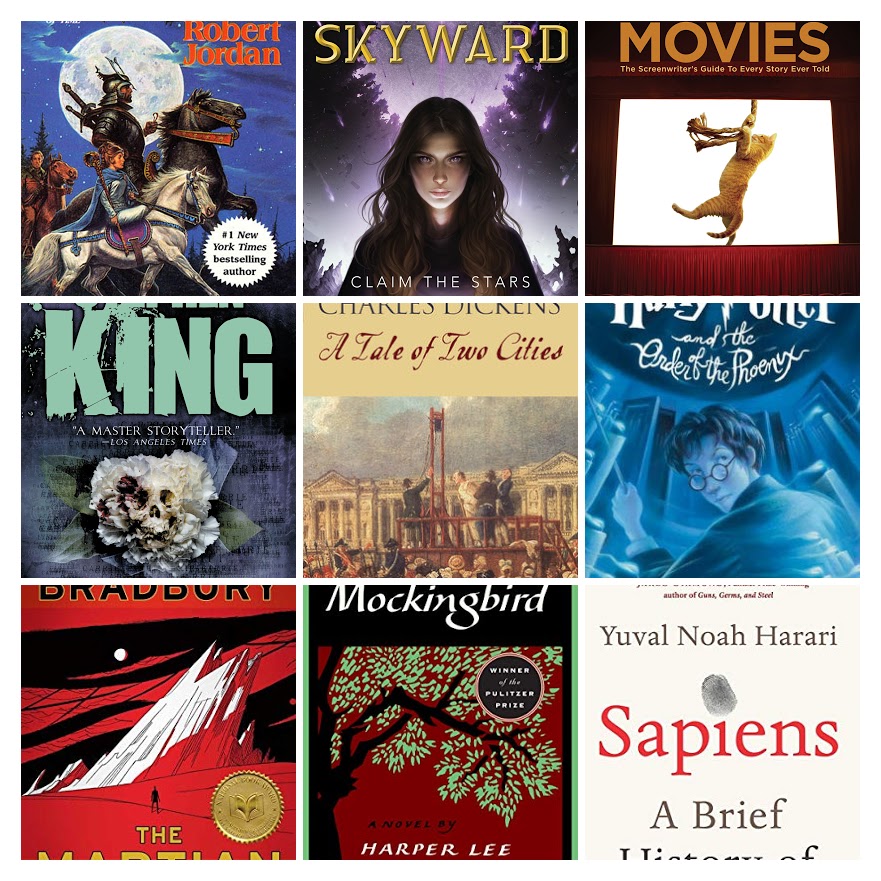
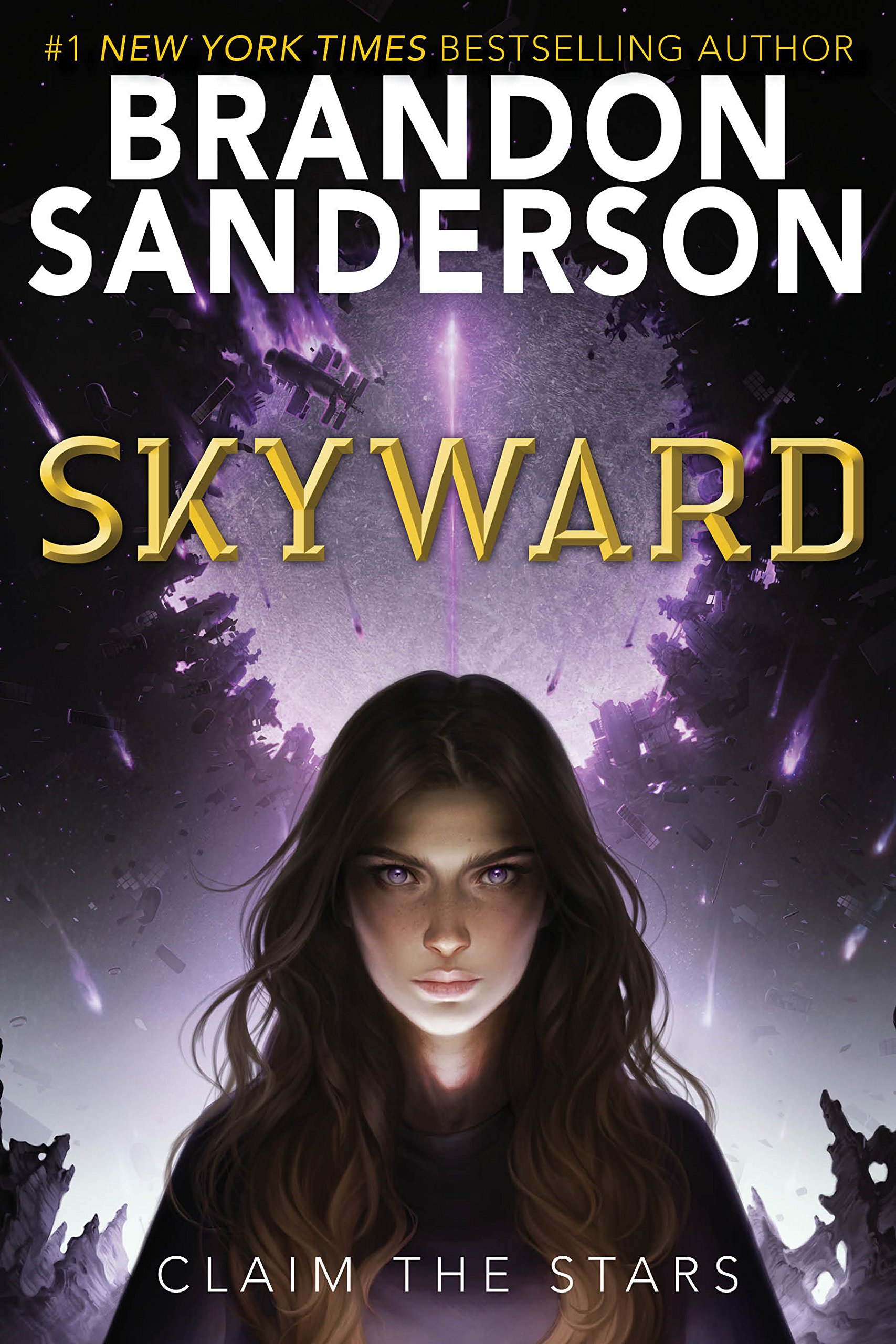
Sanderson has proven himself to be a connoisseur of speculative fiction. This Young Adult science fiction novel was actually the first Brandon Sanderson novel I had read. Since then, I’ve read Elantris and the first Mistborn book of the Mistborn trilogy. While he does appear to truly excel with epic fantasy, here is a novel that is fantastic as a Young Adult novel and as science fiction.
Sanderson’s fantasy Cosmere works are about fully realized and compelling characters. Skyward is no exception. Spensa is an assertive teenage girl with a chip on her shoulder and a bravado that’s actually a mask for her own insecurities. She grows up despised by her peers for the idea that her father defected from his comrades in a battle between human starships and the Krell, a race of aliens that humans on the planet of Detritus have been at war with for a long time.
The premise of the world and conflict is one that we’ve seen before: backdrop of long lasting war between humans and an eerie confusing alien species and human militaries and governments have covered up events and truths about such war. We’ve seen this in notable science fiction works such as the novel Ender’s Game by Orson Scott Card and the anime TV series Neon Genesis: Evangelion.
While Skyward is no Ender’s Game, it is a great coming of age story with a great arc for Spensa. Her arc ties into the plot, revealing new layers to the worldbuilding alongside and tied into setbacks and complications for a teenager coming into herself and trying to understand a world that presents many problems for her.
Who can’t relate to that?
There’s also a very interesting seed planted at the beginning of the book a family tradition of being able to listen to the stars.
We know that the Skyward books are for Sanderson to take breaks from his larger books like The Stormlight Archive, but he doesn’t slack off in these breaks. While we’ve seen this human race vs. alien species with governmental mystery setup, unique worldbuilding, three dimensional characters and compelling character arcs make for a strong Brandon Sanderson book.
Also, man those dogfight scenes from the perspective of Spensa piloting a starship in the sky are so fun to read! Seriously, I would say the book is worth it for sci-fi fans just because of how cool those scenes are. It’s impressive that Sanderson was able to pull them off so well in prose.
The physics and military culture is also very well researched and realized.
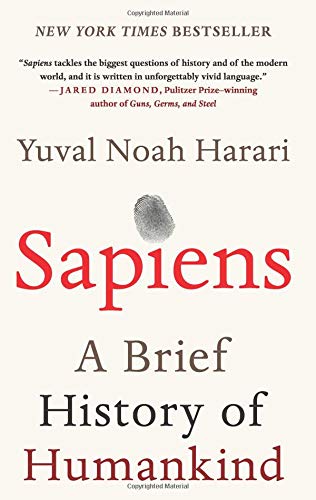
Sapiens: A Brief History of Humankindby Yuval Noah Harari
This book is extremely informal to anyone looking for a dive into the source of human developments and science. It’s a careful distillation of science, history, politics, philosophy, economics and psychology that explores some large anthropological questions about the root cause of cultural patterns and societal trends like arms races and the rise of empires throughout history.
Even if you disagree with any of Yuval Noah Harari’s claims, his intellect, research and deliberation make for a compelling read that is ought to be appreciated and considered.
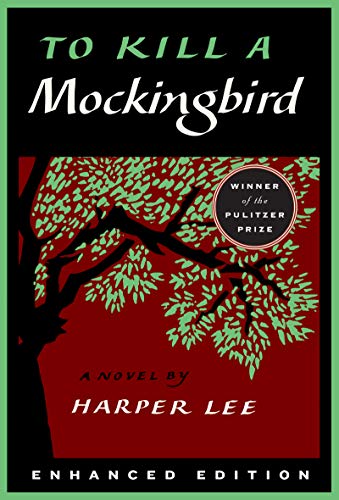
This book is a classic that’s a careful snapshot of a time bygone with issues that still linger today, unfortunately.
It’s also a great work of drama and literature. Crispus Atticus is one of my favorite characters in all of literature including all of the novels that I have ever read.
His court monologue is also one of my favorite monologues ever.
This is a great showcase of how childhoods and perspectives are affected by things like privilege, peer pressure, alienation and societal problems.
Just because of its subject matter, I recommend this book to people of all tastes
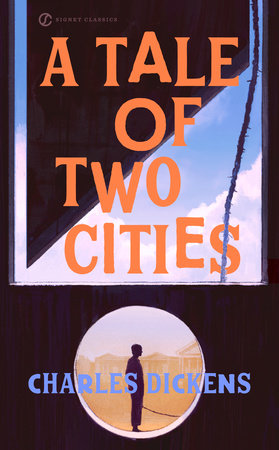
Dickens is Dickens. His prose is Dickens prose and reflects the embellishments of a literary Victorian England gone by.
Granted, reading this on my own resulted in more going over my head than if I had read this for an English class. Nonetheless, anyone interested in the classics and anyone who wants to learn about the political climates of past historical periods should check out this book.
Christopher Nolan has said that The Dark Knight Rises is heavily inspired by this book, which makes me want to re-read it. TDKR is a movie that like A Take of Two Cities carefully depicts the political anxieties of its culture at the time of its publication. That can be said of the entire Dark Knight trilogy which is a great post-9/11 commentary of Western civilization.
I wrote about this series extensively in my two blog posts about it and I still stand behind what I said in them. This is very interesting work of cerebral science fiction and also a snapshot of the writing styles of older early 20th century science fiction. There is very little substance for characters and the three books are very plot and concept oriented. There is little to no action as all of the wars and battles occur outside of the page.
Nonetheless, if you can get past the distinct and sometimes difficult writing style, you can be immersed in a saga of political speculation that is based off of the fall of the Roman Empire. There are lots of thought provoking questions posed about the changes in political movements over the course of the generations that inherit them.
This series also champions science and reasoning. A galactic empire is on the decline and a group of scientists and thinkers retreat to the edge of the galaxy to form the Foundation, a research group centered on finding a solution to the Empire’s decline and distilling the culture of the empire into the Encyclopedia Galactica for generations who live after the fall of the Empire.
This is all prompted by the psychohistorian Hari Seldon who predicts the fall of the empire. Psychohistory is a fictional science centered on the study of political systems and cultures which use mathematics to accurately predict the future of political systems.
Cool stuff. My lengthier blog posts about this series are posted at the end of this article.
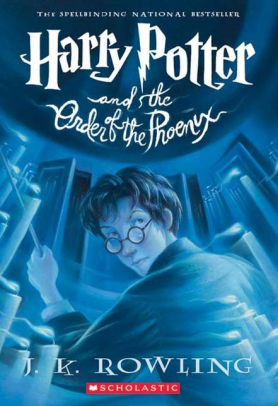
Harry Potter and the Order of the Phoenix by J.K. Rowling
I read the Harry Potter series when I was in middle school. Picking this book up over the summer at the age of 16, I was curious to see if the teenage woes of this story were accurate to what I’m through right now. I wondered if the read would be any different since I actually have gone through the adolescent phases of Harry Potter.
I picked up the fifth book particularly because I’d just gone through the year that Harry had gone through. His fifth year was my sophomore year.
I can attest that the adolescent gripes and experiences in this book are definitely true to real life. Confused about how to girls? Check. Getting caught up in what your peers think about if even if you don’t want to? Check. Getting stressed over mounting schoolwork and increasing responsibilities? Check. General moodiness? Check.
The Harry Potter series will stand the test of time as being an extremely unique coming of age story that blends the British school story with fantasy and mystery.
The kind of portal fantasy that Harry Potter is, is a response to the gradual starvation of spirituality that Western civilization has gone through due to an overemphasis of scientific thought and objectivity. Those are the anxieties that are exaggerated in the Dursley household where imagination of any sort and anything outside of “normal” is basically banned.
No wonder those books connected with so many people! While most of us don’t live with Dursley types, so many of us are from suburban communities like the Dursley’s and have lived amidst a culture of scarce spirituality.
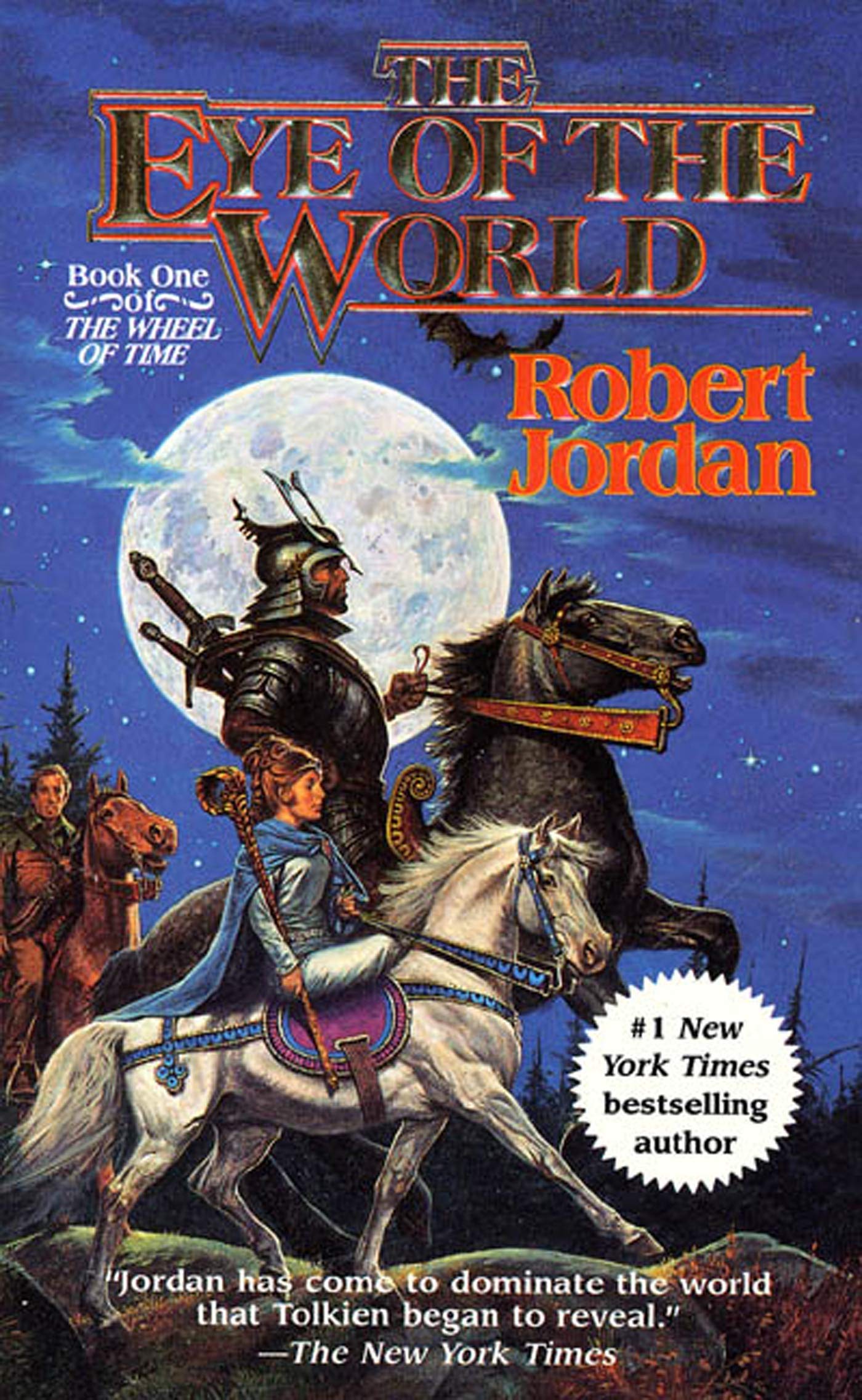
The Eye of the World by Robert Jordan (being the first book in The Wheel of Time series)
This is a behemoth of an epic fantasy novel. I rank it as one of my favorite books ever and Robert Jordan as easily one of my favorite writers ever. Jordan deserves to be ranked among the likes of J.R.R. Tolkien as one of the greatest of Western fantasy authors and speculative fiction authors.
His is a refreshing take on fantasy because it moves away from the mold of traditional European fantasy. Like Tolkien, Jordan served in a war, the Vietnam War. His exposure to and research in Asian culture is on display as the name itself, The Wheel of Time refers to the cyclical nature of the world’s magic and pattern of history which occurs in repeating ages. This is alludes to the cyclical nature of time in Buddhism and Hinduism.
The influence on Sanderson is also on display. The characters are extremely well realized, diverse and Jordan describes the psychological effects of the story on the character as Sanderson is well known for doing. Female characters share just as much of the spotlight as the male characters and are just as powerful and have just as much agency if not more.
The effects of an “adventure” take its toll on characters whose psychological consequences are carefully explored. The character’s agony, exhaustion and trauma are detailed. Jordan is obviously drawing upon the toll that war had taken on him.
Fans of Dune will find influences here and shared characteristics between this epic fantasy and the science fiction epic of Dune.
This is a great blend of world cultures, taking from European culture as well as different Asian cultures and the world mixing supposedly continues throughout the series. In that light, The Wheel of Time is truly American fantasy because of how much of a melting pot its cultural influences are.
The story starts off in a traditional hero’s journey format and displays a lot of unique culture, but around the one-third mark it really takes off pacing wise and becomes tonally darker. From there on out, the world unfolds rapidly becoming bigger and bigger with each page.
This is a wonderful and super effective coming of age story and a must read for anyone coming into fantasy.
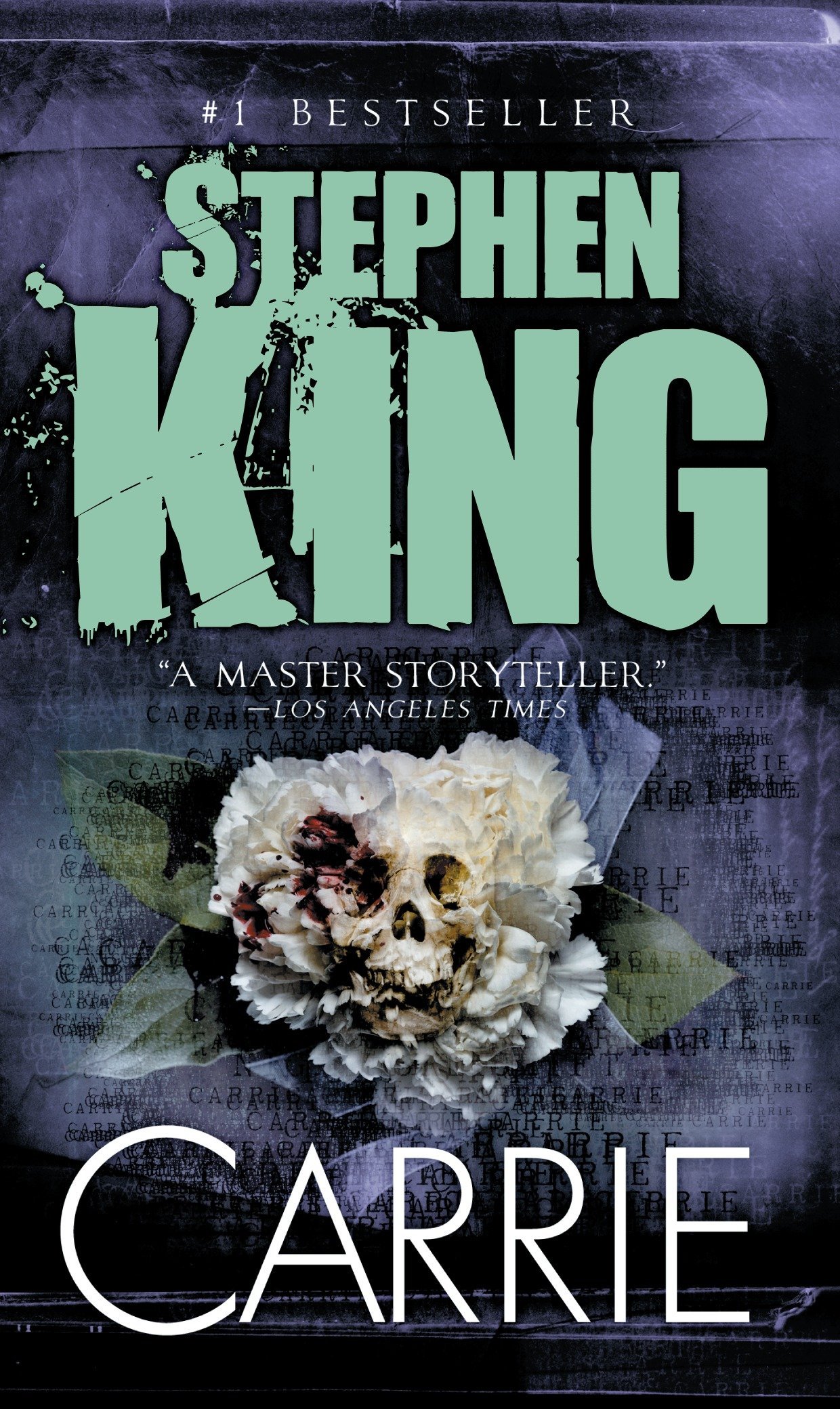
Carrie is a Stephen King classic. His trademark suspense, thrill and scare factor are all on display in this book which can also qualify as science fiction.
You can find the hidden anxieties of a late 20th century suburban American mosty white town that was also on display in It.
It is hard not to empathize with Carrie so when she does do questionable things, it makes them even more horrifying since you can understand her motives very well.
This is a short read and an exciting one at that. I highly recommend this to fans of speculative fiction. Stephen King does not go as in depth as a book like It, but it shares a lot of characteristics including an elaborate depiction and condemnation of bullying.
I’m going to have to write an whole blog post on Stephen King and Stranger Things and how they resonate so well with an America of anxious suburbanites like myself.
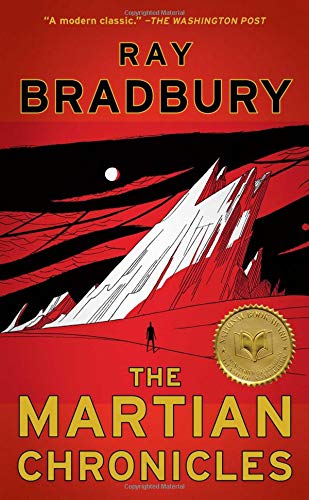
The Martian Chronicles is a wonderful work of science fiction and speculative fiction. It is a great speculation on the human colonization of a foreign planet and the potential interactions of human beings and aliens.
Here, aliens are akin to the many indingeous cultures of real life Earth history who were trampled upon, marginizaled and eventually driven out and stripped of their culture by colonists. This book is definitely a commentary and critique of Western colonalism. It’s also a warning about the potential capitalist ventures and monopolizations of space exploration.
This isn’t a surpirse for Bradbury since so much of his science fiction works serve as warnings. I mean, the guy wrote for The Twight Zone for god’s sake!
There’s a lot of wonderful flowery prose depicting large Martian landscapes and also exploring the mysticism of the Martians themselves. The human colonizers are the scientific, materialistic and capitalistic culture trampling upon a culture of authenticity, appreciation for nature and art. In short, they are the the culture that emphasizes spirituality.
Badbury predicted a lack of interest in things like reading, religion and art in Fahrenheit 451 and that commentary is also found here. There are many lone human characters who defect from other humans for reasons related to ethical disagreements and a disdain for a lack of appreciation or spirituality on the part of humans.
The book consists of self-contained cerebral stories each with its own message that pertains to the overall message of the book. This is a must read for science fiction fans and a great encapsulation of the “water canals on Mars” era in science fiction when it was falsely believed that there were canals on Mars.
At the end of this article is linked a video dissecting the book and explaining the canals on Mars phenomenon. The reason is actually hilarious.
World Mythology Third Edition: An Anthology of the Great Myths and Epics by Donna Rosenberg(reading still in progress)
This books has taught me a lot about World mythology and the culture and history that determines and influences it. It spans regions from Ancient Greece to the ancient African tribes of long ago. This world spanning curation allows one to see the archetypical parallels of different cultures’ mythologies.
Each region and myth is started off with historical background which explains what historical and geographical circumstances affected the mythologies.
Save the Cat! Goes to the Movies: The Screenwriter’s Guide to Every Story Ever Told by Blake Snyder (reading still in progress)
This book is a very useful tool for anyone interesting in screenwriting or at least story structure. It details a format that most culturally successful movies follow. It spans so many different genres and typed of stories. There’s a whole section called “Dude with a Problem” where “Dude with a Problem” movies from Die Hard to Deep Impact are dissected.
Personal favorites of mine such as Alien, The Matrix and Blade Runner are also discussed.
Everything is viewed through the Blade Snyder Beat Sheet named by the author of the book after himself. The Beat Sheet consists of 14 parts.
Each movie is analyzed and then compared against its “type” of story and a list of similar movies is included.
This is a great thoughtful book for anyone interested in screenwriting. It’s also a sequel to a book called Save the Cat! The Last Book on Screenwriting You’ll Ever Need.




 G.R. Nanda