Concept sketch of Eagle’s “basement” by G.R. Nanda
“Great,” said Father Hawk. “Great.” He looked down and squinted. “But…………..I am great!” he shouted as he looked back up, frowning at the huntsman who hovered placidly in the sky.
“I-I’m a god. Or I was. I was a god. I could fly all through the universe. I already was great.”
The huntsman cocked an eyebrow.
“Were you?” he asked. “Was that chance or did you actually do something to make you deserve to be a god?”
Father Hawk was silent. He finally sighed and answered.
“No, yeah. I guess I didn’t do anything to……………deserve being a god.”
“That was at the hands of the universe, wasn’t it?” said the huntsman. “Only the universe is truly great. Greater than you. Greater than me. You were given godhood. You didn’t earn it. That cannot be called great.”
“What you choose to do with what you are given is what makes you great.”
“Yeah? Well!” started Father Hawk. “The godhood given to me is gone! You took it away from me!”
“To teach you a lesson. Your goodhood made you weak. You grew comfortable in your power. You became restless and the lives of your wife and child are paying for it.”
“How do you know these things about me?” said Father Hawk.
“The soul of every animal I kill in my canyons passes into me in its death. I learn about every animal and then give it a safe sanctuary to exist in for all of its toil.”
“You are now in that sanctuary: the ethereal grasslands.”
“But,” started Father Hawk, “I don’t want to be here!”
“I know,” said the huntsman. “You and I know that flowing through your blood and heart and locked into your brain is the yearning for flight into the stars. You were meant to be a god. And you can strive to rightfully claim your godhood and in doing so, prove………….greatness. “
“But look!” said Father Hawk. “I can’t use the powers of god anymore. I can’t go get that flower!” he pointed in the direction of the rock formation and its flower. “I have nothing.”
“Do you?” implored the huntsman. “Do you have legs and arms? Do you have eyes and a brain? You have the gifts of being an animal.”
“Do not forget that an animal you are!” said the huntsman, pointing at Father Hawk.”And before you can be a great god, you must be a great animal.”
“Because that’s what you are, aren’t you?” he asked. “An animal.”
“And what kind of god were you before? You were a hawk god. An animal that was a god.”
Father Hawk’s eyes dropped as he let the words sink in.
“Some of the other animals hated me because I was a god,” said Father Hawk. “In the canyons.”
“So they did,” said the huntsman. “They didn’t want to share their lands with someone who’s lived with so much more than them. There’s nothing you can do about that. What can you do right now?”
“You have lost your godhood, but have you lost your will?”
“I-I-I don’t know,” said Father Hawk.
“Well, you must know and soon or else you’ll be too late to return to godhood and save your wife and child,” said the huntsman.
“If you really care!” said Father Hawk, “why don’t you just give the flower to my wife? You don’t even have to give me godhood! But I can’t bear what I’ve let happen to my wife and my child! That’s the reason why I left and ended up in your canyons!”
“Well, here’s a start!” said the huntsman who’d started beaming. “Putting someone else before you. And not just any someone. The mother of your child and the child itself. Would you have done that without hard times? If your godhood had not been taken away? If you were still flying through the universe from star to planet to asteroid to star, without a bit of physical harm laid on your feathers, would you have put someone else before your gratification, thrill and escape?”
“I don’t know,” muttered Father Hawk. There was silence for a few seconds.
“Anyway,” said the huntsman, “like I said, the coyote guards the flower that I could once pluck freely. It was a flower that grew in random places, waiting for me to water it and eat and then share its petals with the universe.”
“The eternal coyote was a pup growing on the Misty Moon. He was the only animal bigger than me I’d ever seen. But since he was merely a babe, I let him be. I was actually scared of him. He grew so big on the Moon, with only the Mists to look through, so I let him be. But he was looking over my canyons too. And the bigger he got, the more he needed to eat. The small plants of the Misty Moon weren’t enough. So he spotted my flower and leaped for it, falling into the dark cavern you walked in.”
“Scared he would do harm in my canyons, I closed off the hole with rocks. I thought he would die in the dark without food or water. But I didn’t know there was a pool below his ledge and glowing crystals to keep him pleased and seeds from the flower to consume.”
“Those were seeds I was supposed to plant to grow new flowers. I can’t do that anymore and one day, the seeds will run out.”
“I underestimated the coyote and the darkest depths of my canyons. Now, he prowls there, haunting my spirit and mind,” he said, pointing towards the coyote in the distance and his rock formations which were shrouded in darkness. “The deepest and darkest of ourselves can feed our monsters if we don’t intervene. If we do nothing. I learned the hard way.”
“Wait,” said Father Hawk. “You…………..were…………….scared?”
“Why yes!” exclaimed the huntsman, chuckling. “Even I, the eternal huntsman who’s been prowling these canyons for age immemorial, have my own shortcomings. I am powerful, but I am not perfect. I am flawed and like everything and the universe itself, I am always learning.”
“That is something you have to accept soon because you can’t keep running away from all that plagues you. You can’t run away from your mistakes as you’ve been doing.”
“I am too big to reach into the coyote’s dwelling. The stars and my constellations make me big and give me many views, but even the cosmos have their limitations. Only an animal as small as you can reach in it. I have bequeathed this quest to you because of your mind. While your godly powers are gone, you still have the intellect of a god. You are smart enough to converse with me and to deal with the coyote.”
“So………………….what do you say?” asked the huntsman. “Do you accept the quest for the flower?”
“I want to,” said Father Hawk. “It’s just that I’ve never really done anything like this before. I’ve become so used to running away from my problems that confronting something like the coyote seems……………impossible.”
“It will become possible in your mind as soon as you prove it,” said the huntsman. “Like any challenge, you will learn more about it and yourself as you work on it than if you don’t.”
“You will make mistakes along the way, but learning from them will make you stronger.” Father Hawk pondered everything he heard. The journey of this quest seemed to promise hardships and frightening experiences. But what was the other path? It was being stuck here.
In the grasslands, trapped amongst other animals in the endless fields– fields of the same. Same everything. Same grass stretching on and on.
The mass of green needles swaying gently smelled fresh and earthly. The gentle breeze wafted the natural scents from all around.
However, staying in one place against the moving grass, the needles were prickly on Father Hawk. He realized that he had to move with the current or the current would scathe him.
It was time. To take a stand and venture forth for a greater thing. Father Hawk had a wife and child to save, an invading coyote to destroy and a godhood to reclaim. No matter how fresh the air was, if he stayed here too long, he knew he would grow sick of it. If he couldn’t bear the same small terrain of a planet for so long that he had to soar into the cosmos, he knew he wouldn’t be able to bear the same lands of grass for so long.
He had to move and venture to the coyote.
“I accept the quest,” said Father Hawk. He looked up into the pale eyes outlined in the ghostly apparition of the huntsman with a furrowed, scrunched determination.
The darkness of night behind the huntsman was fading away to light. The stars were fading and blinking out. The six large stars that made up the huntsman’s body were disappearing alongside the huntsman himself included.
As he faded away, he spoke his final words that morning:
“Venture forth towards the coyote’s rock, travel lightly, but gather your resources and look out for the beady-eyed eagle for she will guide you further.”
And with that, he faded away completely, replaced by the baby blue of the morning sky.
Concept sketch of Eagle’s “basement” by G.R. Nanda
Even as he was spinning, Father Hawk could feel his heart sink. He never felt inevitability more than now.
Plummeting in space, he could do nothing as he moved closer and closer to the huntsman.
The huntsman’s legs trailed behind him in a blue haze that melted away into the stars.
He suddenly reached behind him and pulled out a bow that was hanging on his back. He pulled an arrow from a quiver and notched it on the bow in a single quick motion.
The glowing white string of the bow whined with its strain and the bow creaked. In a flash, the arrow shot through, whizzing loudly.
It was a flaming white shooting star that coursed through the cosmos and engulfed Father Hawk in a burning fire.
Everything was white. Father Hawk could not see his body. He could only see white. It was everywhere and everything.
Eventually, Father Hawk gasped as he hit a prickly surface. Looking down at his claws, he could see that what he’d landed on was a patch of tufts of green needles. It was grass and as Father Hawk moved around, pressing his body on different patches of grass and feeling new tufts poke at him, more of the grass revealed itself to him.
Leaning to one direction, patches of green appeared out of the white haze. Leaning to another, green emerged in that direction. Moving elsewhere, patches formed in other areas like fog was lifting away from them.
Blurred edges cleared away to show new patches of grass as Father Hawk inched closer and looked all around him.
He stood up and shook his head and ruffled his feathers, shaking off some dirt and pebbles. He blinked and looked around.
The large meadow was expanding. Rolling fields of grass growing– pushing into the white expanse.
Father Hawk felt an ant scuttle underneath him, pressing the blades of grass and causing him to flinch.
The ant disappeared into the grass. A breeze passed through, blowing blades of grass to the left, causing them to rustle in a soft musical sound.
From far off were chirping sounds, faint at first and constantly interrupted by the sound of the wind and the rustling grass, but growing ever louder and multiplying.
Grass pressed together and crinkled with the dirt behind Father Hawk. He whirled around and came face to face with a squirrel with beady eyes and a coat of bushy brown fur. Father Hawk cringed and moved backwards, fearing what the squirrel would inflict on him.
But the squirrel did nothing but sit on hind legs, poised while its furry tail arched back, moving its jaw in a munching motion and boring its big black eyes into Father Hawk’s.
The squirrel was nearly as big as Father Hawk, which was unusual for the god who was so used to being the bigger animal before he entered the great huntsman’s canyons.
The squirrel was even bigger than the rest of the small feral creatures he’d encountered. It was a squirrel bigger than the squirrels of the canyon. This all meant that Father Hawk was even smaller in these grasslands than he was in the canyons.
The squirrel made a soft clicking noise and bared two large teeth and then quickly bounced away, scuttling into the thickness of the grasses in front of Father Hawk before disappearing.
There was more chirping as the breeze died down and a flock of tiny songbirds emerged from the distance, flying high over the grasses and then over Father Hawk’s head.
The grasslands continued to expand ever outwards in the far off distance. Green blurs pushed out. Where there were blurs bordered by a white haze, hazy green patches of grass popped up.
And wherever the grasses expanded, more animals and critters appeared.
Out of the grasses emerged quiet deer poking their antlers into the grass, traveling in small groups to the right and left.
Their tan hides and lean bodies were close enough to be seen in between the thick blades of grass.
More songbirds appeared, chirping musically. They were small and frantic. They were dark and light colored, but with associated splotches, white and dark.
Butterflies popped out of the ground, fluttering with brightly colored wings. They were orange and blue and they were all dotted by black.
All around, the growing grasslands were coming to life and life was just as big if not even bigger than Father Hawk.
The borders of the grasslands were expanding and curiously enough, in the far off distance, rock outcrops formed out of the white haze.
Dozens of grey and rust-colored rock formations and cliffs appeared, encircling the grasslands far away.
And then, directly in front of Father Hawk, a large slab of grey rock appeared far away and protruded into white haze. A white cloud was passing over its topmost ledge. When it passed, a tree with pink leaves appeared at the top. When Father Hawk looked closely, he saw that it was actually the flower from the wet cave of the canyons. The flower was the size of a huge tree and the rock mound was now the size of a mountain.
It was separated by chunks that jutted out of the sides, just like in the cave. A part of the ledge sticking out from the middle moved.
It was the coyote, a faint blur of grey in the distance, blending into the grey and orange rock.
Father Hawk whirled around. A herd of elk walked together in the grass against the dark horizon. The sun hung in front of the sky over the far off cliffs and rock faces, edging towards the middle of the sky.
Farther down, on the opposite end of the hemisphere, the light blue of the sky made way for a deep velvet and dark blue spotted by the milky splotches of constellations and their pearly white stars.
The same grouping of six stars hung, looming over the walking elk. The more Father Haws looked, the more the pale apparition of the huntsman glowed to life.
Once again, the man with the billowing white locks of hair and the bulging sinewy muscles loomed over him.
“WELCOME TO THE SANCTUARY OF HEAVENLY ANIMALS!” he thundered.
“Now you are truly an animal of nature. You are no more a god and you do not have god-like powers anymore.”
“You can live here. Or, if you want to return to reality, travel to Coyote’s cliff and return a stolen flower to me.”
“In return you will be given a petal from the flower which you can use to heal your wife and you will be given a seed from the flower to plant a home for your child.”
“When all is done, you will be more than what you came into my canyons as. For you will have shown greatness.”
Concept sketch of Eagle’s “basement” by G.R. Nanda
“The coyote stared at Father Hawk with glaring yellow eyes that glinted with a strange brightness.”
“Father Hawk’s heart sank. He was almost too tired to be afraid or run away. It was indeed getting tiresome, constantly running away, constantly being surprised and chased away by some new threat.”
“It was too much. Maybe, Father Hawk thought, he was okay with this confrontation this time. Maybe, he could just allow what was going to happen to happen.”
“ He was frozen. He was trembling, but he was too tired to move. He couldn’t bear facing the wolf, yet his eyes were locked into its eyes.”
“Father Hawk’s own beady black eyes were staring into the yellow depths of the wolf’s.”
“They were a strange bright yellow. Yellow surrounded a narrow black slit in the middle of the eyeball.”
“The more time Father Hawk spent looking into the wolf’s eyes, the more he could make out the finer details: thin marks– strips of yellow encircling the black slit in dark and light shades of yellow.”
“The coyote blinked. His dark eyelids slowly closed, moving over his eyes. When they reopened, the beam of light shooting down from the ceiling was brighter, thicker.”
“Father Hawk looked up and he saw hundreds of faintly glowing crystals embedded in the rock ceiling around the gaping hole where the beam of light came through. The crystals were of varying sizes, all jagged and all of a pale bluish-white complexion.”
“Father Hawk looked down at the reflection of the ceiling on the water he was standing in.”
“Besides the faint ripples, the image was pretty close to that of the rocky roof.”
“In the water, Father Hawk saw many glowing shite orbs against an expanse of dark rock.”
“It looked like stars against the black expanse of space.”
“The spots of bright white light rippled in the water, but as Father Hawk stilled, the water became calmer. The stillness in the water made it really appear as if it was a pool of stars in space.”
“Father Hawk took another step in the pool, breaking the stillness with ripples once more.”
“The image of the roof and its crystals jiggled. The glowing pinpricks brightened and turned whiter. The substance of the water grew darker.”
“The coyote let out a bark that penetrated the quiet of the cave and startled Father Hawk. He gave a start and staggered backwards. He let out a yelp before he plummeted into the water, consumed by the pool and its starry reflection.”
“Father Hawk closed his eyes and a stinging chill enveloped him, pouring into every part of his body. He was caught in the overwhelming movement of freefall.”
“He gasped and opened his eyes to find himself in the deep starry space that was reflected in the pool. There were crystals no more; for now they were stars– so many stars dotting the black expanse he fell in. Spinning and falling through, the stars became rapid lines of movement and white masses, all of them dizzying him.”
“As Father Hawk fell for some time, the space cleared up for him. His legs trailed above him as his head plummeted. Spinning around, he caught the sight of the coyote still standing atop a rock ledge which was now suspended in space and illuminated by a colorful gaseous nebula of blue, green and red peppered by white stars.”
“Down below, six huge stars– six massive glowing orbs moved towards Father Hawk.”
“Out of their shape popped the huntsman– a ghostly blue apparition. His muscles bulged, his eyes glowed and his beard flowed.”“‘WHAT DID I TELL YOU?’ boomed the huntsman’s voice.”
Concept sketch of Eagle’s “basement” by G.R. Nanda
“Fear flooded Father Hawk.”
“He stopped trembling from anger because now he was trembling out of fear.”
“It was like a sharp bar of ice– a long icicle that plummeted on him, piercing him from his head to his gut.”
“His eyes were wide with fear. He stood in one spot, transfixed at the sight of the huntsman who was hovering above him in the sky.”
“There was no escape. These were the huntsman’s lands.”
“His whole life, Fathe Hawk thought that the universe belonged to him– that he was free to roam and see all that he pleased.”
“He thought that he had seen all and therefore he knew all.”
“The more time he spent in these canyons, the more he was realizing that he didn’t know as much as he thought and that he couldn’t see as much as he thought.”
“‘I know that look,’ said the huntsman in his booming voice that shook the canyon walls. ‘It’s the look of fear I see whenever I stand over my prey open for the strike.’ “
“‘But what I wonder is why you are angry. That is not something I see in the animals of these canyons often. The rest of them are too busy being afraid and running away to be angry or to scream at the sky.’”
“‘Well, most of them don’t want to call my attention.’”
“Father Hawk opened his mouth, wanting to shout. Do or say anything defiant. He had to voice his strength. He would not submit.”
“Instead, all that came out was mumbling and moaning.”
“The huntsman frowned.”
“‘Who………are you?’ he asked. ‘What is your story and how does it bring you here in this state?’”
“Trembling, Father Hawk’s feet gave away; he walked backwards slightly and he slipped over smooth stones. He planted his palms on the ground, catching himself. He gulped a large breath of air and scurried to his left. Without looking up, Father Hawk rushed to the wall and its many pits and recesses looming ahead of him.”
“‘Why do you run?’ thundered the huntsman. ‘Fleeing is futile before me!’”
“‘The more you run and run and run and run away–’’
“There was a loud rippling noise, like the shaking and vibrating of twin suns sent across the universe. It was followed by a crash as the sound of a thunderclap emerged, followed by ricocheting and the crumbling of many rock ledges towering high above.”
“Father Hawk flinched and fell on his back in time to see the lasso that was in the huntsman’s hands, extending out over the heavens, licking the rock tops in its wake. As it retracted, it sent rubble raining down the wall above Father Hawk like snow.”
“-the more my hunt advances!” continued the huntsman. “The more you leave me no other choice!”
“Father Hawk found a corner in the wall: dark, crowded and over boulders and rubble leading into a tight cave of darkness.”
“There was another whip, beginning with a vibration and followed by the crack and thundering of broken, crashing rubble.”
“‘You cannot escape!’”
“Father Hawk got caught in the narrow space between pieces of rock, but he clawed at it so hard that it broke off and he scuttled deeper, furiously. All the while, the canyon walls and the rock of the runnel were vibrating furiously.”
“‘Your size aids you, hawk!’ shoute the huntsman. But just for now! I’m too big to crawl after you, but these are the canyons I’ve known for eons and eons!”
“‘The constellations are ever present and ever-watching. They are my dominion……I am the constellations……………”
“His voice died away in echoes that rebounded far far away. Father Hawk was now deep into the recess of the wall he climbed into.”
“He was panting and he soon became too busy to keep crawling across the jagged rocks. He stopped and his sight blurred. His whole body throbbed and stung with the force of zooming across rough rock.”
“His feathers were torn and bent. His legs were chafed and scratched by the rock. They also trembled. His knees buckled and he lay panting on the floor.”
“As his head lay on the bumpy rock, his feathers became drenched. Father Hawk peered around him and noticed water droplets clinging to the rocks everywhere. He looked up and saw strings of streaming water faintly pouring down rock in the darkness.”
“The water was cool and felt good against him. It made some of the pain lessen.”
“His head was throbbing painfully, but it subsided slowly and slowly. Father Hawk could now hear better. However, his ears still rang with the crashing and breaking rock from outside. And he still heard crashes. He couldn’t tell whether they were echoes of his mind or actual crashes.”
“But he could hear something else now. Something that he could hear more and more with every passing second. It was the trickling and gurgling of water beyond the dark tunnel he was in.”
“There was something else out there. Something………….wetter and………………bigger.”
“It was behind him, farther down the tunnel. Father Hawk grunted and got on his feet. Fear– fear of the tunnels and fear of what was beyond the tunnel mixed inside of him and created a bursting energy.”
“Curiosity soon joined the mix and Father Hawk soon found himself in a trance where he was stumbling forward, fearful, but controlled by an inevitability that he couldn’t understand.”
“The gurgling became louder. The further down the slope of rocks he went, the more the water streamed downwards until Father Hawk felt like he was walking down a river.”
“Slivers of light appeared at the edges of streaming water: little white and silver strains. They grew brighter the further down Father Hawk moved.”
“A small circular opening was illuminated out of the lower depths, showing the end of the tunnel to Father Hawk.”
“The light was coming from there, however faintly. A thin beam was coming out of the opening.”
“The beam entered the pool and danced in little slivers wherever there were ripples. Drops of water were falling down from where the beam came.They fell down and made quiet “plops” and rippled outwards in circles. Father Hawk stepped ever closer to the end of the tunnel. He had walked over several steep piles of jagged rock and was now traversing a smoother embankment that was a few feet away from the rock arch.”
“The water was the loudest it had ever been. Father Hawk’s claws were stepping further into the water, submerging his skinny legs in the cold.”
“He puffed out his feathers and held his wings high across his body. He was already moving into something hawks weren’t supposed to move into: water. He might as well make sure his feathers didn’t get wet.”
“Light glimmered across the pool in thinning lines and in even smaller lines across the water in the tunnel. The archway was directly above Father Hawk. Water dropped from its jagged surface and spilled on Father Hawk’s head and wings, slightly wetting his feathers.”
“He immediately squeezed his eyes and puffed his wings in close over his head. Entering through the archway, Father Hawk saw that the cavern was a lot bigger than he had thought before.”
“What more? The beam of light was coming from a pocket in the roof far up above. But where was that light coming from if it was nighttime? Father Hawk didn’t know.”
“A tall mound of rock stuck up out of the water behind the beam of light. There was a ledge that stuck out of the mount around the middle where there were tufts of drenched-looking fur, some leaves, cracked skeletons of tiny creatures and what looked like dried up and chewed pieces of meat.”
“At the very top of the mound on a smooth and tiny surface, jutting out of the ever thinning rock was a small patch of what looked like dirt. On top of that was a single lonely flower. Even in the darkness, the petals’ bright color shone fiercely.”
“Father Hawk stopped wading through the water to admire the strangeness of a flower growing deep in the depths of canyons.”
“The flower was thin and looked slightly stooped over.”
“Father Hawk moved closer towards the mount, sloshing through the water, faster than before.” “The feathers of his bottom quickly drenched and he jumped back, causing bigger ripples in the pool.”
“There was a snarl that sounded from ahead. Father Hawk froze in fear.”
“A dark mass moved out from behind the mound. It was slow and stealthy. Suddenly, it crept forward, paws first, followed by its long, muscly and furry legs. It jumped onto the lower ledge of the mound, pushing a skeleton and its bones off the ledge and revealing itself to be the coyote it was.”
“The bones plopped in the water, causing a small splash.”
Concept sketch of Eagle’s “basement” by G.R. Nanda
“Deep into the canyons he ventured, scuttling below rock ridges and frantically flapping away into the distance.”
“And always– always, he was fearful, always on the move from the ever-watchful gaze of the huntsman who was also moving, stealthily creeping along ledges and canyon walls, always keeping a high ground so that he could maintain a vast view of the lands and so he could stay still and melt into the outlines of dotted stars, becoming constellations of poised animals and hunters.”
“The huntsman was like a shadow of the starry sky, always sweeping to and fro, always stealthy. He was majestic and powerful.”
“When Father Hawk managed to spot him, he was carefully molded into a constellation. Father Hawk was usually dark and translucent, but his features were always sharp and large. His chest was broad and heavyset. His long eyebrows and beard were bristling and waving in the wind. Despite his muscly features and nimble movements, his face showed age. It was lined with wrinkles and his hair was grayed.”
“His eyes were hard-set, lined with age, dark and deep with a thoughtful and time-tested knowing wisdom.”
“Whenever his ancient brown pupils laid their gaze upon Father Hawk, an all-consuming fear flooded him, filling him with a desperation and propulsion of energy. He would look away from the watchful gaze and move as fast as he could in the opposite direction.”
“Many days, when Father Hawk found himself in the solace of a concealing cavern, the roof of a ledge or the protection of a wall after flying in many varying directions, all the while dodging the fiery stars of whizzing arrows, he would shed tears and sniffle.”
“Why? Because he no longer felt like the god he was. Here he was in the canyons, small, vulnerable and unknowing like the rest of the busy eagles, squirrels, elk and turkeys he passed now on a daily basis.”
“Father Hawk would scuttle on his weary legs and claws towards the dying embers of a setting sun that was already faint in the starry sky. After being chased relentlessly by the old huntsman, he could walk away to retire to sleep, assured by the reality that the old huntsman would retire to sleep a night too.”
“Father Hawk would sometimes walk past gurgling rivers, mighty winding rock walls, giant boulders, caverns or jagged pitfalls on his defeated nighttime walks.”
“Sometimes, he would pass a herd of proud feathered turkeys or jittery and fluffy rabbits, perking their ears and keeping low, close to the walls. Or groups of a few giant elks, tall, strong-limbed and quick.”
“Always, these animals paid Father Hawk little mind. Always, Father Hawk felt alone, alienated. Everyone else seemed to be quick footed (or winged), on the move to survive. They were too busy herding to pay Father Hawk much mind. No one regarded him with the dignified air of a god.”
“Father Hawk felt terribly alone and terribly unspecial.”
“He was even starting to question whether he was a special god.
“Or any kind of special thing.”
“Nothing came as easy as it used to.”
“Life had changed seemingly overnight. Everyday was filled with anxiety and work. Father Hawk had to feed himself, no longer sustained by the suns of energy and nutrients that he and Mother Hawk had been replenished by. He was far far away from his home. Now, the sun in the sky was lonely and distant.”
“Father Hawk had to peck for worms or fish at the banks of rivers.”
“By the end of the day, after his own hunting and after keeping away from the throes of the huntsman, Father Hawk was simply too exhausted to even attempt flying out of the canyons, away from the huntsman’s sight and back into the cosmos.”
“Father Hawk had never felt so trapped in his whole life.”
“He decided that he was going to escape the canyons– or die trying.”
“It was going to be one-shot.”
“Once concerted effort.”
“The cold red sun was setting on Father Hawk’s 24th night. Twilight was settling in and the canyons were losing their warm luminescent tint. Every night, the canyons turned their dullest darkest shade of gray.”
“The animals of the canyons stopped scuttling, chirping and flapping. Many of them burrowed in for the night. They stayed under the rock surface that served as highways for frantic creatures and in nests made of rare twigs and bark.”
“Darkness settled in. As it settled in every night. Thicker than kupernacle slime. Seeping in. Blanketing the world under a starry sky ruled by a lonely moon glowing dully overhead.”
“The darkness created drowsiness.”
“But as Father Hawk had figured out, it also created a cover, a concealment for those who could fight their nightly drowsiness.”
“He’d been storing grub, worm meat and leaves in a corner of a deep cavern set into a looming cliff, awaiting the night when he would have to consume much to keep him moving through the exhaustion of the day that would inevitably seep into the drudgery of a waking night.”
“He frantically shoved the skinny meat and the leaves alongside the dirt that he dragged along, into his mouth.”
“He gobbled as much as he could and crouching slowly and stealthily, moved out and into the cold grey rock of the night, only illuminated by the faint light of the stars and the dull moon.”
“He moved slowly– cautiously because the darkness shrouded what was in front of him and because his movements might tip off the huntsman. Especially now, when all was so deathly still and what would have been the barely audible noise of stepping over some rocks was loud and piercing, becoming the focus of a world that had become deathly still– deathly quiet.”
“The gray rock only appeared gray at the tops of formations sticking up into the sky. The lower the rock, the darker and more pitch black it was.”
“There were only slivers of dull gray showing atop the topmost layers of rock sticking up into the sky.”
“Father Hawk would not dare to fly into the heavens right away because he knew that the flapping of his wings would be loud and stand out more than it usually did.”
“He would have to creep up and up. Slowly and carefully, inching up a slope of rock and more slopes of rocks that were further up until he was at a topmost layer, then he would be close enough to the stars and fly away.”
“By the time the great huntsman heard him, Father Hawk would be long gone into the depths of space.”
“Father Hawk was surrounded by giant walls of rock, which was a problem. The walls were sticking out and upwards pretty narrowly.
“He could not get on even footing with the walls when they shot up so starkly.”
“They were mountains he could not climb. Mountains that were out of reach.”
“All that he found himself doing was wandering aimlessly throughout the endless corridors of scraggly rock and jagged ravines of water that whispered in its soft gurgling flow between the giant walls.”
“Pockets and large holes appeared out of the rock spires above Father Hawk, showing swaths of stars, endless and sprawling– dizzyingly so.”
…………………………………………………………………………………………..
The story suddenly paused as the noise of the whispering winds came into a much larger focus than before. The man who had been narrating coughed and cleared his throat.Then, he inhaled deeply and slowly sighed.
Then, he continued.
“Father Hawk was alone amongst the looming walls and ledges of rock whose underbellies he purposely sought out in order to hide as far below as he could from the sky and the sight of the huntsman.”
“But now, he felt more trapped than he ever had before.”
“His muscles ached, he trembled with exhaustion and his feathers quivered.”
“Finally, under all of the pressure and the pain of missed sleep, Father Hawk heaved forward and crashed on his butt.”
“The proud boisterous god who had once known no limits in the universe was now reduced to a withered, skinny stooped-over animal with dirt and grime caked into his dry feathers.”
“Defeat and the pain of his hurt ego caused tears to well up in his eyes and stream down his face, dripping off of his feathers and his beak.”
“He moaned in anguish and squeezed his eyes shut. He gritted his teeth and when he opened his eyes, they were wide and furiously glaring. He bared his teeth and shot a hateful look at the sky. His anguish had turned into anger and resentment.”
“He stopped moaning and started screaming.”
“‘Curse you universe!’”
“Tears continued to flow from his eyes. They made his vision murky, blurring the white wells of stars together amidst the blacker and bigger well of space.”
“‘Curse you and your wretched- stupid huntsman! If I had to destroy you both, I wouldn’t care if I had to take out myself with you!’”
“Father Hawk jumped off of the boulder he sat on, legs trembling. He shook a fist at the sky.”
“‘I don’t care if I’m destroyed! As long as the universe is destroyed with me.’”
“Father Hawk wiped away tears from his eyes.”
“Up above him, he saw more clearly and what he saw was a group of stars falling down. They were six stars in the shape of a rhombus: three hanging towards him and three trailing behind. The one in between was the corner that was the part the farthest away.”
“They all seemed to blur, brighten and grow larger, leaving hazes of faint luminescent auras in their wake behind them.”
“Suddenly, a broad body with thick limbs appeared as a blue haze behind the descending stars and their glowing white trails.”
“There was a sharp howl, followed by a ‘pop!’ that cracked and thundered through the heavens as the body pushed itself onto and out of those stars.”
“The stars were back to normal and now provided a spectre-like illumination for the edges of the huntsman, strong, glowing and hovering above Father Hawk.”
“He held a wiggling whip above his head. His beard flowed to the left and his eyes bored into Father Hawk’s under the huntsman’s frowning bristling eyebrows.”
“‘Well, that’s an awful lot of anger,’ he spoke in a grating aged voice that boomed from the heavens to the canyons that vibrated in effect.”
“‘More than I’ve ever seen in any of the animals I’ve hunted and have graced these canyons.’”
“‘I almost don’t want to hurt you………..out of pity for all the pain you’ve inflicted upon yourself.’”
Concept sketch of Eagle’s “basement” by G.R. Nanda
When the windstorm and its sounds cleared, drumroll and faint chatter joined the noise of the vicinity.
Singing voices soon joined the mix. Male and female.
“Aaaaaaaaaaaaaaaaaaaaaaaaaaaaaaaaaaa………………………..”
Nickel sat still. He had become too numb to try moving the egg or breaking it with force. The egg was dark enough to make him drowsy.
The chorus died away and was replaced by the raspy, yet booming voice of what seemed to be an old man.
“The age of the Hawk was an age long ago,
in an age before the past world…….an age before our world.
The world was endowed by and created by the hawks, their lives and activities defining the expanse that was our early universe.
From the depths of time and space was formed……………….
……………………………………..the egg.”
The speech seemed to be spoken by a man nearby in a loud voice over the sound of ricocheting drums.
The frenzy of sound was disorienting, bombarding the shell of Nickel’s egg. It reverberated on the ground and vibrated up the shell.
“It was from the depths of time and space that the body of Mother Hawk was impregnated by the all-consuming Father Hawk.”
“The egg was held in the cosmos- in a nest of space and stars for Mother Hawk to sit upon. The shell was almost as dark as the space around it. Where its oval shape was, a pitch-black spot was formed, blocking out the white pearls of stars streaking the galaxy.”
“The darkness of the shell was so thick– thick enough to be the hard armor for the secrets awaiting inside of the egg.”
“For inside the egg……….were the secrets of life!”
A chorus of gasps, feigning surprise, sounded. It seemed to come from the left and the right of the square.
The drumming simultaneously slammed down in prolonged beat, followed by its echo and the beginning of many many soft female voices singing in unison in a high falsetto. It was a wail. A strong, structured and uniform wail sounding the revelation of life.
“Life was hidden. Kept away from Father Hawk. Mother Hawk refused to share. To open. She said it was too soon. Life need not have its eggshell cracked, for life was still being nurtured in the womb and nest of space.”
“This………… angered Father Hawk! He could not wait to see his scion.”
“He raged through the cosmos, trying to pry into the nest which was shrouded in secrecy.”
The drumroll picked up again, becoming louder than ever. It was a thundering racket.
“He pried the best he could, only causing distant stars to explode and planets to collide and burst with his tantrums. It was all in vain, for he was always shunned and his actions never touched the egg.”
“In this time, Mother Hawk and Father Hawk lost their way, becoming angry with each other, for they were trying to undo the actions of the other.”
“Meanwhile, the life inside the egg was roiling and growing. It was an endless void contained in the egg of beginning. It was a formless entity. Swirling. Morphing. It was gaseous and free moving. It was both nothing and everything. It was both colorless and filled with a platitude of hues so intertwined that it really wasn’t any single hue.”
“The inside of the egg was thrashing against the unmovable hard shell, with its free moving and contradictory domains.”
“It was love. It was hate. It was peace. It was conflict. It was desire. It was disgust. It was anger. It was compassion. It was cruelty. It was sadness. It was happiness. It was beautiful. It was gruesome. It was jealousy. It was appreciation. It was deceit and treachery. It was loyalty. It was the best and worst of Mother and Father Hawk.”
“ It–was–life.”
“It was once all there.”
“The secrets of our own existence…………… swirling and bursting without form.”
“Father Hawk wasted away on his own, separated from Mother Hawk. He could not bear to look at her, for he always spotted her swollen womb, Mother Hawk sitting placidly on her nest. Seeing her, he was reminded of her egg and the face of the child inside that he could not see.”
“He thrashed away on his own, angry, bitter– despairing.”
“One day, he sat by himself, trying not to think of his unborn child. No matter how hard he tried, he could not think of anything else. So finally, he gave up and decided to allow his mind to wander to the depth of Mother Hawk’s womb and the space around the egg atop which she sat. The space littered with the stars that would come to illuminate life that was protected by the egg.”
“He came to silently imagine the egg and the space around it, harboring his child. He suddenly got to thinking of how he could take his wife’s attention away from the egg she so carefully nurtured.”
“He had to find a way to pry in between the space of the womb and the nest of space and stars that Mother Hawk sat upon.”
“Suddenly………………………”
The drums quickened and then abruptly stopped.
“Fathew Hawk came up with an idea.”
“It was a risky and bold idea.”
Snares began to thud fervently, but softer and quieter than the drumming from before.
“One that could horribly offend Mother Hawk if she were to see through his motives.”
“Father Hawk planned to seduce Mother Hawk into making love, widening the space between her body and the nest and also loosening her grasp on the egg.”
“He was going to try to penetrate into the space of her womb and in doing so, rock the egg enough that the shell would crack.”
“So, one day, he decided to use his last resort. He decided to do the very thing that he knew Mother Hawk would not be able to resist. The thing that he saved, kept at bay for only the special nights on which love was to be made:
He danced towards Mother Hawk with his feathers puffed out. They pointed out from his chest, nearing Mother Hawk and her nest.”
“Upon seeing him, Mother Hawk immediately loosened her body, letting her womb’s grip on the egg of life lessen.”
“Forgetting all, Mother Hawk joined in Father Hawk’s embrace, partaking in the dance of love.”
“As Father Hawk penetrated Mother Hawk over and over again, the force of explosions in Mother Hawk’s womb and her nest rocked the egg and crushed its shell.”
“The Big Bang had started!”
Nickel’s heart jolted in his chest and his eyes widened in the darkness of his egg.
The Big Bang. Like the Big Bang from physics used to explain the science of the birth of the universe.
Except………….
…………the Big Bang was literally two hawk gods banging each other.
Normally, Nickel would have scoffed and giggled at the obscene absurdity. Now though, he couldn’t help but find himself swept away in the mythology of the two primordial hawks.
After all, what else was left to believe in?
The question horrified him.
“The stars, galaxies and planets of the womb and spiraling hawk nest imploded, all the contents shaking and meshing together. The heat made the dark egg shell go from as black as the cosmos to a radiating and glowing red.”
“While Mother Hawk and Father Hawk were caught up in their passion, the egg shell finally shattered.”
A resounding cacophony of scattered drumming sounded, the loudest of all and so loud that Nickel winced at his throbbing eardrums.
A chorus of low female voices sounded, turning into a falsetto wail.
“LIFE-WAS……..RELEASED!”
The substance that had been trapped inside of the egg for so long was finally free to stretch and collide with planets and stars that were all imploding and colliding with each other.
“Life was now a part of the universe.”
The music of flutes came into being, taking form in a happy harmonizing crescendo with a sprinkling of steady drum beats.
“It was flowing around and across the universe. Immature. Vulnerable. Underdeveloped. Mother Hawk had wanted to wait for life to grow strong enough to be able to crack its egg shell itself. Now, underdeveloped and with space in the shambles of wrecked starstuff, life could not proliferate. It needed a home. And most importantly, it needed a caretaker to guide it through the development that was supposed to happen in the egg, but now had to occur in the dangerous, consequential reality of the universe.”
“Mother Hawk was furious that Father Hawk had tricked her into letting go of her egg.”
“Father Hawk was ashamed of having let his premature offspring, life, loose in a dangerous universe. He could now see that Mother Hawk had been right about their child still needing to develop and grow before awakening from the egg. Seeing life move freely and without form through the universe he wrecked, he was deeply guilty, embarrassed and fearful for his child’s safety.”
“Life stayed in its soft and gaseous embryonic form, unable to thrive in one place. While it was soft, the universe was flaming and filled with sharp shards of space rock.”
“Father Hawk begged for forgiveness from Mother Hawk, but she would not have it. Life was now doomed to fail. She screamed that the egg was supposed to allow for life to develop in safety before it could thrive on its own in the scary universe. Life would not be strong enough to exist in the universe before first being strong enough to break through the egg shell.”
“Life should have been able to take care of itself on its own in the universe. Instead, now it was too weak– infantile, needing a caretaker to nurture it.”
“Mother Hawk, having laid the egg and kept it warm should have been the one with the most knowledge to nurture life.”
“But she was too exhausted from having laid the egg and having watched over it. Life was supposed to break free from the shell, existing independently, giving Mother Hawk her well deserved rest.”
“Now, too weak to offer anything but feeble help, Mother Hawk was wracked with the stresses of fear for her doomed and vulnerable child and anger directed at her husband.”
“Mother Hawk moaned and cried in anguish, sobbing tears out of her beady bird eyes. Whenever Father Hawk tried to console her, she screamed at him in rage.”
“ ‘Leave me alone!’ she said in between sniffles and moans. ‘You brought this upon us and our child! If only you weren’t the only hawk around to be my husband!’”
“Hurt, Father Hawk left her to wither alone in her withering nest.”
“The nest was only supposed to host the egg and Mother Hawk until the birth of life. The nest was only supposed to last until then. The star stuff that held it together was dissipating. Mother Hawk didn’t want to leave and face the universe and she definitely didn’t want to face Father Hawk, whom she deeply despised for what he had brought upon.”
“Father Hawk felt helpless. He was wracked with guilt and shame, so he roamed the universe, opening his large feathered wings and soaring through the starry heavens and cosmos.”
“He wanted to think in solitude. But most of all, he wanted to escape.”
“He wandered far away, moving in between hurtling asteroids, dodging dying suns and cowering at the fire of wrecked galaxies.”
“He wandered far and wide, never stopping until he happened upon an old huntsman along the ways of a rocky canyon he was exploring. The huntsman was stalking animals amidst a pool of stars encompassing the grey canyons formed out of asteroid rock. He would spring them with his arrows which were tipped at their ends with stars out of his longbow.”
“The huntsman was so successful because the animals often thought the arrows were just far off twinkling stars. That is, until arrows came close enough that the animals could see that they were actually powerful shooting stars. But by then, it was too late.”
“The fiery star-studded arrows were upon them.”
“The huntsman was very sly about the way he moved through the cosmos. He would move quickly from star shape to star shape, standing still in awkward positions so that his body seemed like it was the outlines of stars.”
“Father Hawk had accidentally stumbled upon the man who formed the first constellations.”
“He had stumbled into a starry canyon much like our own, where there were many different animals hiding out in the vast open spaces, protected by the ceilings of rock walls– made out of ancient asteroids that crashed on this small crusty dwarf planet.”
“The many animals crawling and scuttering through the grey rock were like the animals of the Desolate Plains: frolicking squirrels, stealthy coyotes, frantic turkeys, soaring eagles, trotting sheep and grazing elk.”
“Father Hawk was astounded. Looking from behind a large rock wall, he saw the burly grey-haired huntsman standing over a ledge as his long beard flowed in the breeze, wavering from the outline of stars that made up his figure. Below the ledge was the biggest contradiction Father Hawk had ever seen: a wasteland full of life.”
“Father Hawk moved ever forward to see more of the view below the ledge. His claws accidentally crunched some pebbles.”
“The huntsman immediately whirled around, his body leaving the shape and disguise of the stars behind him.”
“Spotting a flock of eagles flying above a cliff pass far below, Father Hawk scuttled behind as quickly as he could and plummeted over the ledge.”
“When he joined the formation of soaring eagles, he spread his wings wide, soaring amongst them into the far reaches of the canyon.”
“The eagles paid him no mind, zooming into the distance, intent on their flight.”
“They flew through jagged openings in bumpy rock walls and over small streams. They swooped over and under rock when it protruded out of the ground or jutted out into the sky from walls surrounding them.”
“Father Hawk’s heart thumped loudly with fear. He needed to know if he was followed by the huntsman, but he didn’t dare look back.”
“And just like that, Father Hawk was no longer a god, but yet another animal of the canyons, on the move and facing the possibility of death at the hands of the ever present huntsman.”
Concept sketch of Eagle’s “basement” by G.R. Nanda
Walking around the smelting station, Farrul and Nickel were led to two large circular vessels in between the flaming posts.
Behind, were tribespeople shrouded in dark fog, standing still.
The crackle of flames atop the plates was louder than the eerie wind which was always blowing.
Nickel had grown so accustomed to the fog in the wind that he took it for granted as much as he had taken the home of the Eagle’s inner machinery, the roar of city traffic or the ever constant chirping of nighttime critters from his vague ancient memories of natural surroundings.
The line Nickel was moving and suddenly stopped.
“Take off your shirts and climb into the eggs,” ordered Li.
“What?” Nickel and Farrul said — Nickel a beat of a second after Farrul.
Li looked ahead at the shrouded group behind the bottom halves of the “eggs” that lay before them.
“You heard him,” said Jerome in an indifferent tone. “Everything’s been leading to this. Great Father Hawk cannot wait!”
Nickel flinched at his sudden harshness of tone.
What other choice did he have other than to do as he was told? These people fed him after all.
Nickel inhaled and stepped forward.
While the people behind the eggs were darkened, he could still feel their eyes on him. Seeing the still and faint frames of the people behind him, Nickel felt tense and on the spot. He watched with expectation.
“We don’t have all day,” growled Li.
Farrul stepped forward next to Nickel.
Nickel slowly removed his long shirt, taking the time to slowly graze the rough Atlantic Tribe– made cloth against his skin. He shivered. As the shirt came off, he felt awkward, exposed and–– naked (even though he wasn’t).
Once he removed it, he dropped the cloth to the ground. Farrul started to remove his own shirt.
Nickel looked down at his body, raising his palms towards himself. He was certainly leaner-– close to frail. His stomach was more gaunt than before, however his skin was caullused and held in tighter against muscles that were harder than before.
This was the first time he’d been able to focus on his own body’s appearance since leaving the Eagle. Labor with the tribe had certainly made him harder- more muscly. It had also made him gaunter. He looked more toned, but weaker at the same time.
Layers of grime coated different parts of his arms, back and chest. While he looked rougher and tougher, he was still not nearly as tough looking as the many boys who weren’t too exhausted to use the stone pull-up bar and otherwise work their bodies out while everyone else collapsed from the exertion of their labor.
Farrul looked similar to Nickel, toned with bare muscles sticking out against his skin. But he was still gaunter than Nickel. Skinnier.
Of course. Unlike Nickel, Farrul wasn’t as well fed or able to tarry in excess for a significant portion of his life.
He eyed Nickel nervously. They were wide and his eyebrows were slanted in insecurity. It was unlike Farrul, whose eyebrows were often furrowed in a scowling facade of bravado and cynicism.
They both shivered and drew in ragged breaths, entering through and around chattering teeth.
“Sit down,” orderdered Aziz. “In front of the eggs with your backs turned to them.”
They did as they were told. Nickel sat cross-legged in front of the left egg. He still shivered, but when his bare back touched the cold surface of the egg, he cringed and gave a large shudder, taking his skin off of the egg. Even through his pants, he felt the stony ground poke his legs.
He didn’t know where to look since all of the eyes staring at him from the front made him uncomfortable.
Once Farrul was seated in front of the right egg, footsteps sounded from behind. Two adolescent girls appeared from around stone posts, carrying stone pitchers that spilled water lapping at the rims.
Nickel had no time to get a good look at the one who moved to Farrul because the other girl moved right up to him and started working, occupying his attention. She moved in swift precise movements, barely looking Nickel in the eye. She quickly squatted down and poured the pitcher of water over Nickel’s head.
He closed his eyes and gasped as lukewarm water slapped the top of his head and trickled down in torrents that did nothing to improve the shivering cold, over his face, neck and chest.
For a while, when water flowed over his skin and was trapped in his eye lashes, he grimaced and his vision was blurred. He only saw murky brown and red colors of the girl moving across him, using a rough cloth surface to scrub him.
He pulled his stomach and the muscles all over his body taut, wanting to pull inwards and away from what was happening to him.
But as he blinked away, the water and moisture dried on his face. He started getting used to the scrubbing. His breathing became more normal, losing its shallowness.
He looked into the girl’s face. She had a smooth aquiline face. Her eyes were narrow and above her sharply curving jaw were tight lips pursed in concentration.
Her limbs were slender– gazelle-like. Looking her up and down, Nickel observed she was very slim– petite, but long.
Judging by the sudden constriction in his chest, he figured she was also attractive.
Suddenly, their eyes met–– hers intent, dangerous, his wide, insecure and distracted. He immediately averted his eyes, embarrassment flowing through him and burning his cheeks.
A rough scrape at his stomach brought his attention to the girl’s hands which were fervently scrubbing his body, trying so ferociously to quickly dry him that she was almost scratching him.
She upped the ante, really digging into his flesh. Nickel winced and squeezed his eyes. His skin was starting to feel rubbed raw.
Farrul grunted loudly.
The girl in front of him reached around and scooted behind him, scrubbing the droplets on his back. Feeling uncomfortable, he kept his arms close to his body and hunched over, staying still.
The girl literally pushed him forward in order to scrub his back.
He grunted from the force, but allowed her to scrub.
Li, Aziz and one of the scruffy-haired boys still stood there grim-faced. The other scruffy-haired man to the right end of the line appeared to be smirking at Nickel.
Flustered, he looked at the ground.
While he felt uncomfortable at his bareness, he strangely felt open to the scrubbing girl. He felt ruffled by her. Nervous of her. But strangely…………. giddy about her………. and her proximity to him.
Nickel scoffed and shook his head.
The girl returned to him. The young woman who had scrubbed Farrul returned to him too. They both returned with new pitchers. They dipped their fingers in the pitchers and began painting the two young men.
The girl working on Nickel brought a finger of orange paint from a pitcher stiff with orange liquid to Nickel’s chest. He shuddered and slightly grimaced at the stiff but molten feel of the enamel.
The girl furrowed her eyebrows and squinted in concentration at his chest. She looked away from his face, at her hands on his body, indifferent to his eyes and even his personality. It was as if he was just an object– a canvas — and her real area of focus. The thing she was really interacting with was his skin and the picture she was trying to draw on it.
She started with long orange streaks lined horizontally across the skin above his breast; she drew three on each side of his chest, the two bottom ones each shorter than the one above.
She reached in the pitcher again and produced a glob of orange paint that she pressed in between the six lines, creating a wide circle. Then, she brought the pointer and index finger of her left hand up, marking a small oval streak above. Then, she cupped that oval off with a curving mark.
She wiped those fingers on her dress and reached into a smaller pitcher with her other hand, producing brown paint.
Below the drawing of what appeared to be a winged creature (Nickel didn’t think this was a coincidence), she drew three lines: two slanted and next to each other and one on top.
A nest?
Using the same fingers, she marked his shoulders with three dots that reached across.
‘You guys do this to all newborn babies?” Nickel muttered. The girl ignored him.
Without looking into his eyes, she peered at his face. She dipped her right hand into the pitcher of orange paint again. Bringing it up to his face, she painted streaks on both of his cheeks. She dipped her fingers again into a different pitcher, drawing yellow paint and rubbed them on the middle of his forehead.
Around and around. She started from a small center point and reached around, stopping before she touched his eyebrows. She removed her hand and stepped away, leaving many gooey and moist spots on his skin, with an especially gooey and moist spot on his forehead.
The young woman who’d drawn on Farrul stepped away too. Farrul looked queasy. His mouth was drawn into a straight firm line. It trembled with discomfort. His eyes twitched.
Farrul had marks on himself too. They seemed to have been drawn on him in locations similar to where Nickel had felt paint on his skin.
A large yellow round ball was drawn on his forehead (the sun?) and orange streaks lined his cheeks, three on each side. Each line below was shorter than the one above.
Encircling his bare shoulders were three small brown dots. On his chest, painted over his breasts were orange streaks just like the ones on his face: three on each side, each lower streak shorter than the one above.
In between the streaks was a round orange ball, just like the one glistening on Nickel’s chest.
A hawk.
Their chest’ drawings looked like hawks.
And the three brown lines below each of their chests looked like nests.
The girl in front of Nickel stood away, looking him over.
She held her small eyes high, peering over her nose. A small smile of satisfaction showed on her edging lips.
She quickly turned around and walked away, around the post and back to the silent herd, waiting behind. Her short ponytail bounced one way and the other.
The young woman who’d drawn on Farrul did the same.
Nickel’s painter was imprinted onto his mind. Even after she’d left and his vision had returned to the scene of firelight casting itself upon the solemnnity before them in the darkness of early dawn, she refused to leave his mind’s eye.
Her presence and her appearance captivated him.
It was almost as if………………..
………………he’d known her from before.
The sound of crunching stone filled the air, becoming louder and louder as herds of tribespeople emptied the huts on the East and West Wing, one after the other.
Was she from an acht-chi dream?
The wind had been slight, just a weak phantom of a storm, howling faintly. It kicked up a bit, obscuring the several crunching feet, emerging out of the house and from behind the stone posts.
Carried torches had emerged in the East Wing, illuminating the crowd of once darkened figures. Both Nickel and Farrul’s painters were there standing alongside grim men, women, man-lings, woman-lings and young children.
Some small rows of people were adorned in colorful outfits with more feathers on a person and splayed on a person than Nickel had ever seen in the Atlantic Tribe.
There were people holding stained drum sets and various other instruments Nickel could not recognize.
While more carried torches joined the mix, swaths of orange fog thickened around them like chemicals in water, billowing, surrounding and obscuring.
The howling wind picked up, slowly rising in volume.
“Wait!” said Nickel, turning to face Li and the other men who’d brought him here. “Storms starting! What are we supposed to do? What are me and Farrul supposed to do? We can’t stay out here with no shirts on!”
“That’s why you’re getting into the eggs,” said Aziz.
Nickel and Farrul turned around. Their eggs were of a grey grainy stone exterior, while the interior was dark, pitch black and smelled slightly musty.
Nickel looked back at the men. They too were becoming obscured by the orange. But he could see their hair and their long tan robes, flowing to the right in the wind.
“So get in!” growled Li.
Farrul and Nickel climbed into their stone half-eggs. Tenderly lowering himself in, Nickel allowed for the touch of cold stone, dirt and some other mostly dried residue.
It was cold and smelled dank. Certain areas of the dark interior were wet, dripping onto his skin and soaking parts of his pants.
The bottom was dark and the whole interior became a lot darker once a top half was placed on top by a tribesperson, sealing him off from the developing windstorm and sealing him in a pitch-dark that he couldn’t escape, no matter how hard he tried to pound or tear at the shell with his hands.
So, the Dune (2020) trailer dropped and I am writing this post the day after to gush over it. This blog post will be different from my usual posts as in it is is not a chapter in my novel or a long form essay or article of my lengthy thoughts.
I wouldn’t even take this as as seriously as my articles and novel chapters because as I said before, this is a lot of fanboying.
I have been waiting so freaking long for this trailer; really ever since Vanity Fair released the first stills from Denis Villeneuve’s upcoming blockbuster. The stills were carefully chosen, picked to limit any huge revelations like sand-worms for example.
None of the crazy moments from the trailer like wide shots of flying ornithopters, spacecrafts coursing through dusty wind storms or sand-worms were revealed.
SO……once they were, it seems like the millions of fans of Dune and sci-fi literature came out of the woods strewn with Frank Herbert novels and pouring onto the internet to gush.
A collective gush.
Because it’s fucking Dune. What else do you expect us to do? Especially now, when it seems like one of the best working directors and one of the best science fiction directors working is going to give justice to the book.
Also, it’s not another generic action movie.
Not that I’m not looking forward to watching Robert Pattinson as Batman because I totally am. I’m just tired of the barrage of the overly formulaic movies. I like certain comic book movies. It’s just that Spider-Man: Far from Home left a tired aftertaste for CGI ridden superhero movies with little to no cinematic artistic flair.
I’m tired. Of COVID too.
And the new Black Widow prequel movie isn’t the kind of escapism I’m looking for. I mean, I’m always open to surprising quality, but do we really need a Black Widow prequel? I mean, she’s already dead for crying out loud!
Black Widow was just a sexy femme fatale in the MCU. She was probably there to balance off Robert Downey Jr’s boyish playboy masculinity (which isn’t a bad or cheap creative choice).
She’s really only there to be some kind of connecting thread between the real players like Iron Man or Captain America. I mean, let’s not kid ourselves. The side characters don’t have nearly as much definition or importance to the plot as most of the middle aged white guys (save for Black Panther).
And even the middle aged white guys aren’t super different. How many more quippy tech/science literate men who make one liners at least once every five minutes can we bear?
Black Widow is one of the few side characters with more definition. It’s Bucky Barnes, the winter soldier, and then Black Widow. In that order too. Falcon and War Hammer are just the placeholder token black side-kicks. They’re basically interchangeable.
Black Widow served her purpose. She was a glue between the big players Tony Stark and Steve Rodgers. Alongside Nick Fury, she had a bit of an outsider perspective to the superhero team given her background as a spy. She sacrificed her life in a tragic and sad end, for Hawkeye and the rest of her friends in Endgame (2019).
So, do we really need a Black Widow prequel?
Avengers: Infinity War (2028) and Avengers: Endgame (2019) were good movies. The franchise culminating finale of connected films and plot threads was all an impressive payoff for the barrage of sometimes trite superhero origin stories.
The MCU had certain great content and movies. It’s just that Marvel movies have become less contained. They’re stretched out and repetitive.
That is why we need filmmakers like Denis Villeneuve. When trailers like Dune’s drop drop and they’re number one on YouTube’s trending page, it’s exciting and I find myself hopeful that these movies will be a turning point in the culture, turning the tide away from the mainstream generic and more towards the auteur.
Of course, if Dune is a successful mega hit and super culturally influential, we might end up seeing a bunch of lazy Dune ripoffs pumped out by Hollywood just as the first Star Wars was.
Now enough about my pretentious pop culture rants and more about the trailer, the reason that I’m writing this blog post in the first place.
Hans Zimmer never disappoints. He is one of the best film composers of our time and trailers are super slick when they go to his music.
After Paul puts his hand in “the box” we hear a twang of Middle Eastern infused music which I am so pumped about. It’s what I was hoping for in the soundtrack. I hope there are more Arab influences to the whole soundtrack.
The visuals look beautiful. Denis’s biggest artistic merits include his visuals. His movies have great cinematography and this trailer definitely shows.
Roger Deakins did a great job as the cinematographer for Villeneuve’s last movie Blade Runner 2049 (2017)and while he didn’t return for Dune, Greg Frasier has taken the helm. Fraiser is responsible for the cinematography of the two most visually interesting, striking and unique Disney Star Wars live action pieces: Rouge One (2016) and The Mandalorian (2019). Rouge One has sweeping scenes of beautiful landscapes and imperial sites all with a tone and display of grittiness and grimness. It was very grounded.
The trailer begins with glimpses of Chani in the desert, calling to Paul and my god– do those glimpses look splendid with her standing against a backdrop of a hot desert sun with curtains of sand blowing below.
Just everything; the colors and lighting.
The flying soldiers who I assume are Harkonnens, look great dropping onto a desert landscape while the sky behind them is pure black.
So many shots are just eerie, awe inspiring or both in their scope.
The ornitophters look very unique for aircrafts in a space opera movie.
The landscapes, costuming and production design of what I saw so far is so incredibly promising. I have been nerdgasming so much over this trailer. On the day it was released, I watched it at least 20 times.
The production design and scope of the landscapes do look different from Blade Runner 2049, a Villeneuve movie that blew me away. It was the production design, cinematography and visuals that did so (as I have decided is one of the main attraction at a Villeneuve movie). Everything was kaleidoscopic, cramped and congested. The architecture was incredibly complex and modern.
It perfectly caputured cyberpunk and the feel of the original Blade Runner.
What I’ve seen from this trailer is not like that. That is becuase Dune is not cyberpunk. It’s a fuedalistic space opera set in a time after computers were banned. The world is supposed to feel ancient, futuristic at the same time.
I’m impressed that Villeneuve can totally switch mindsets when it comes to moving on to another project. I’m glad he’s really trying to make this movie its own thing and aesthetic.
The world of Dune appears to be more spacious and some of the architecture, especially what we saw on Caladan appears to be comparatively primitive in an almost medieval way. While the architecture in much of the trailer is sleek and futuristic, the spaciousness makes it appear ancient in its style.
I am totally on board with that.
So much looks ornate and regal.
It looks like Shakespeare in space.
Once again, I am totally on board with that.
Dune is Shakespearean science fiction.
The aircraft that appear at 1:51 of the trailer are reminiscent of the vehicular beasts of Blade Runner 2049 that had glaring headlights and protrusions. That’s cool.
I remember watching Blade Runner 2049 knowing that the director was working on Dune. I got to the part where Ryan Gosling and Harrison Ford’s characters are caught by agents of Wallace who arrive at the deserted Vegas casino that serves as Rick Deckard’s (Ford’s character) home. They come in these huge sleek flying cars with lights that seem to pierce the orange smog. Looking at this, I remember thinking, “holy shit, this tech looks cool, imagine what he’s gonna do with Dune!”
The imagery looks super crisp and the colors pop out. The color grading looks great. The blacks are really pitch black (nod to the video essayist Patrick H. Williams and his video on the color grading of superhero movies).
The effects for the shield practice between Paul and Gurney Halleck are splendid. If I’m going off of my superhero tirade, the effects don’t look like bad CGI lightning energy or something.
They almost look like video game characters glitching in a video game, their edges vibrating while they move abnormally fast.
The ornithopters look great. They’ve really taken on a unique design, resembling helicopters, but still appearing alien in their design.
The cast itself seems to be made up of great choices.
Thimothy Chalamet is young looking enough to be Paul Atreides. Just as was described by Frank Herbert, Paul has an aquilline face. Timothy’s face is appropriately curved and his over all proportions are small enough to show that is still in his adolescence phase. I’m 16 and he looks bigger than me in the trailer, but it’s still an apt casting choice compared to previous castings for Paul Atreides.
He’s not so young or soft looking that there is no intensity to the character’s appearance (he doesn’t have a baby face).
I could go on an on about the cast. The main characters seem so appropriately cast by their actors’ physique and reputations on screen.
Many of the characters of the antagonizing forces have an unearthly feel to them. The Harkonnens are super pale and hairless. The Baron is sickly and intimidating amidst gas and when he’s coming out of a slime/liquid substance.
And my GOD! That sandworm at the end!
We didn’t get to see the sandworm moving freely and really LIVING and acting in its environment. That would take a scene of the sandworm which I wouldn’t want a trailer or any preview of this movie to spare.
We only get shots. And that is great.
Save us the real majesty and motion of the sandworm living on the planet Arrakis for the actual movie.
Shots are used sparingly, but all provide us a glimpse of the scope of the sandworm. While it was incredibly brief, it looked epic, awe inspiring and truly monstrous in its sheer size against the humans in still suits.
The final shot of the sandworm’s mouth and its long skinny teeth retracting inwards is truly awesome.
Everything in the desert looks visually interesting. The dark colors and light colors seem carefully contrasted.
The Fremen stand out amidst the desert.
Denis Villeneuve’s preference for practical effects and real sets is to key to the grounding of his science fiction. His choice to shoot in the real desert shows his appreciation for nature and the actors’ immersion. In an interview, he explained, “my argument was they didn’t shoot Jaws in a swimming pool.”
Villeneuve’s past films and their acute ingenuity, unique stylistic flair and cerebral qualities make me certain that Dune can be a movie propelled by artistic vision rather than market driven studio meddling (cough* I’m taking about you, Disney. Cough* And your Star Wars sequel trilogy. Cough* Cough* Cough*).
He has described himself as a lifelong science fiction fan and avid reader of science fiction since his adolescent days. His art has proven itslef over and over again and it seems as if his career has been leading up to this pinnacle.
Yes, it’s only a trailer. And yes, I haven’t even seen the movie yet, but it seems like there’s something special in store for us. It’s possible. It’s possible that we have the movie of a generation awaiting us. A movie that will do for the culture what Peter Jackson’s Lord of the Rings movies and the original Star Wars trilogy did.
Online hype culture has indeed gotten tiresome over the years. If you find my gushing to be trite or even shallow, what I have to say is, at least I’m not basing my entire online presence through videos of me overreacting to trailers. That shit is trite, super old and a pathetic way to make money online.
Trailer reactions mixed in with videos of actual commentary and perhaps thoughtful commentary sprinkled within a trailer reaction is respectable as opposed to people who record themselves making loud unintelligible noises of over-excitement about a movie trailer.
This isn’t a trailer for The Rise of Skywalker (2019) or the next Disney MCU movie. This isn’t a trailer for yet another franchise installment or extension of yet another washed out generic action or superhero movie.
This is a trailer for yes, a reboot, but one of something that hasn’t been tried out fully– fleshed out fully.
There have been some adaptations of Dune, but Frank Herbert’s universe is huge and there is a thirst for a faithful on screen adaptation to spawn stories from the universe and interest in it.
And if there’s anyone I trust to make a film adaptation that’s as mind blowing and artistic as Frank Herbert’s novel, it’s definitely the guy who was able to make a sequel to Blade Runner (1982) that lives up to the accomplishments of the original, kept its tone and expanded the scope of the already established story and world.
I’m hoping that films like this will shake things up in Hollywood. While it’s possible to see trite copycat movies, it’s also possible that many doors will be opened for science fiction entertainment.
As I said in a prior post, the success of the Harry Potter movies caused a frantic hurrying from producers to find more middle grade fantasy books to adapt.
It might not be the worst thing if more classic science fiction works from the 20th century are adapted.
Many of the classics like the Foundation trilogy and Dune have been so hard to adapt because their hyper speculative nature is expensive for the screen. It not only takes big budgets and impressive filmaking technology to adapt classic sci-fi. It also takes ingenuity on the page of the screenplay as well as the way the movie is shot and directed in order to capture the cerebral and extraplotive themes found in the pages of an Asimov or Herbert book.
Not only has technology and CGI caught up to the wonders of fantasy and science fiction, but Denis Villeneuve has proven himself time and time again to have quite the knack for ingenuity.
If Villeueve is successful, this Dune movie will tackle a scope, design and ambition on par with The Lord of the Rings movie trilogy. Peter Jackson alongside the Harry Potter filmmakers are responsible for the fantasy genre’s elevation from an obscure sub-culture to the mainstream culture.
Its possible that we wouldn’t have gotten a Game of Thrones show from HBO if it weren’t for Peter Jackson.
Perhaps, we will see a science fiction renascence in the aftermath of Dune where classic sci-fi worlds and stories will see the light of the screen in the hands of a new generation tackling old stories in a new light with diverse characters.
The also hard to adapt Foundation trilogy has finally seen technology catch up, as is seen in the trailer for Apple TV’s Foundation television series.
So, we never know.
It’s quite satisfying to have seen the Dune trailer trending at number one on YouTube. Amidst all the corporate hogwash that’s usually on the trending page, there lay the tease of a world that fans of science fiction books have been clamoring for since the 1960s.
I was glad for my community; the science fiction and fantasy community that’s filled with bookworms who are ready to join in masses online to celebrate our beloved art and culture.
But in case, I’m hyping this movie so much to the point that the excitement will cloud the actual viewing of this movie, I’ll leave with this Dune (the book) quote:
“Hope clouds observation.”
And in case I have clouded my own or your chances at real observation, ignore much of what I said because all it is really just fanboying. I can still be excited though.
Concept sketch of Eagle’s “basement” by G.R. Nanda
For two weeks, Nickel and Farrul worked with the people of the tribe, hunting, cooking and cleaning up after the remnants of the Atlantic Tribe’s activities. They joined in the routines of the tribespeople, oftentimes struggling to keep up with people who had been doing these activities a certain way for their whole lives. Their fingers became chafed and cold when they scrubbed rough stone plates with cold water collected from slimy green kupernacle leaves. While they both struggled, Farrul fared better, having lived in the Desolate Plains of the Atlantic longer. While Farrul could suck off his fingers and move on to the next activity, Nickel would often exhale warm air onto his palms, numb from cold after cleaning with water for several minutes to hours. Farrul and the rest of the tribespeople hardly ever waited for Nickel to finish before moving away for the next task.
The most tedious activity was harvesting kupernacle leaves. In the back of the tribe’s encampment behind all of the huts and squares were rows of a few cows and chickens, all mellow and splotched with strange colors due the power plant accident’s effect on these animals’ forebearers. Behind the cows were dozens of rows of kupernacle plants. Their thick and green stems and leaves fluttered and flapped in the winds, stiff enough to withstand the climate.
When Nickel and Farrul had first been brought to the plants, Nickel had noticed that the patch of plants had been placed in a part of the encampment where there weren’t as many spires and broken power plant towers shadowing the earth. A large gap in the looming spires was directly above the patch, allowing room for the sun, however cold and lifeless it was, to shine down.
After brushing away globs of gooey green and slightly pungent smelling slime that had formed along the leaves, Nickel and Farrul used thin stone blades that almost looked like arrowheads to slice open the leaves. The damp smell of vegetation would waft out of the plant. It was the most lifelike thing Nickel had ever smelled in the Desolate Plains
The two of them squeezed out moisture from the soft light colored hexagonal holes embedded inside of the leaves into a stone pitcher.
In a matter of a week, Nickel and Farrul got very accustomed to stone. From stone tools to stone huts, stone was everywhere. Stone was the Atlantic Tribe’s way of life. Rough, hard and uneven. It was a substance that looked like frozen molten lava and gave off a thick, almost suffocating metallic scent.
Every day on the West Wing, the sound of shovels and pickaxes hitting the bank of stone in the earth far away filled the air, its ring echoing and reverberating.
The two of them didn’t get much time to become fully acquainted with the people of the tribe, nonetheless the adolescents were the people they interacted with the most. They were instructed not to perform the acht-chi alongside their peers during the windstorms due to their previous exhaustion and the fact that they would become sicker if they tried to. They did not have the same physiological makeup as the rest of the tribespeople which made them so accustomed to the acht-chi. Nickel and Farrul sometimes felt alienated.
They always camped out inside of the nearest hut they could find while everyone else joined in the astral state of the acht-chi, hyperfocused on their movements until they retired to bed and entered dreamstates full of astral visions and the cryptic lyrics of the singing sorceress.
Life was a haze of non-stop work and routine with minimal opportunities to socialize or play. Life was either the sour and damp scent of the fog outside or the sour, musty and metallic scent of the stone huts.
Even though their work and residence with the Atlantic Tribe had continued for only a few days, it was already starting to feel like months of gruelling existence to Nickel. It was work and mutterings amongst each other for socialization, then hiding out in a hut while the rest of the tribe did the acht-chi, becoming distant inaccessible agents of the orange fog which continued to permeate life and the environment.
In the few movements of company in the small huts, Nickel was at odds with the culture around him. He slept every night with the same group of boys he was assigned to do labor with. He still didn’t get along with the three boys, whose names he found out to be Ahmick, Arolé and Chickel. While he didn’t have much time to speak with them, when he did, he was responding to their taunts.
Li, still promising to show Nickel and Farrul harshness, was indifferent to the gang’s behavior. However, it was clear he was fine with them, as he viewed their behavior as a part of the harshness that supposedly kpet activities going and the youngsters disciplined. Too bad for Nickel that Li held quite a bit of authority, especially with the teenage boys.
Nickel badly wanted to speak to Elder Hawk or Steve, the only people who could take the time to speak in depth with Nickel about his circumstance in this tribe’s rigor and non-stop routine.
But Elder Hawk was closed off for the week, meditating in her hut until the end of the week when Nickel and Farrul’s birthing ceremony would occur.
Steve was still sick and he was recuperating inside of one of the infirmary huts where caretakers guarding the sick assured Nickel that he would be able to see and talk to Steve soon.
What he wanted more than to be able to talk to Elder Hawk or Steve was to be able to climb aboard his American Eagle hovercraft. The hovercraft’s hole from the collision of the tribespeople on the night of Nickel, Steve and Farrul’s arrival had been covered with a tarp. It was left where it had crashed and He-Hawk and She-Hawk had instructed that the surrounding area be cleared. A vehicle from the Past World must not be approached any time soon by the people of the hawk.
The switching watchkeepers of the tribe kept a careful eye on the hovercraft, making sure no one approached it. One time, Nickel saw a small boy run toward the hovercraft before being wrestled off the ground by a watchkeeper who ran towards the boy and carried him away as he wailed and wailed until the watchkeeper’s hands covered his mouth.
Nickel was tempted to grab Steve and Farrul and fly away on the hovercraft, resuming their expected journey to Hedonim. He had even discussed it with Farrul at bedtime, but they had always been too exhausted to keep the whispering going long into the night.
Nickel and Farrul had both been promised by He-Hawk and She-Hawk that after the birthing ceremony, a repair, prayer and blessing from Great Father Hawk would ensue for the hovercraft’s safety, setting it off for its journey to Hedonim.
“You guys broke our hovercraft and you think prayers are going to fix it?” Farrul had angrily complained to She-Hawk. Nickel had been thinking the same thing.
“You’ve already been told it was a necessary precaution!” said He-Hawk, causing Nickel and Farrul to sigh in exasperation.
“I sense distrust in both of you. I don’t think it’s that you don’t trust us– the people of my tribe. I think you– don’t- trust our way of the Hawk. You don’t trust our religion.”
“That is- correct,” blurted Farrul, again speaking out loud what Nickel had been thinking.
“I know that the only thing that’s stopping you from leaving is that we give you a place to sleep and regular food to eat that’s better than what you’re used to,” said He-Hawk, eyeing both of them.
Nickel’s heart sank. A sinking feeling welled in Nickel’s chest and he looked down, away from He-Hawk’s eyes. He felt as if his cover had been blown.
“I know you think our religion is crazy nonsense. I can’t blame you. You’re from the Past World.”
“Look around. You’ll see the movement of My Tribe. You’ll see our discipline, our hunt and the feasts that follow. The people of the Hawk have lived like this for generations, starting way before we were born.”
“In the harshest of places, a group of people flourished. All thanks to an idea. Thanks to a religion.”
“Trust……………….. In Great Father Hawk, Past Worlders.”
“Trust in his people.”
“He will not see you or your….. Hovercraft here for long. To him everything happens for a reason. I promise you will leave with more from us than what we have taken away in hurting your vehicle. The hurt will be the smallest compared to what we give you.”
A windstorm took over, forcing Nickel and Farrul to take cover while He-Hawk performed the acht-chi and took over the tribe affairs.
If not for wind storms, the both of them might not have been so accepting of all the things the tribespeople told them. Whenever the fog sticking in the winds quickened, obscuring Nickel and Farrul’s world more than it was already obscured, they were extremely helpless. Unless they wanted to be flattened by the air or spend the next day coughing and retching from polluted lungs, they had to drop everything and follow whoever was around to follow.
Following. It seemed like that was all that Nickel did. He had felt the glimmer of agency when he took Farrul and Steve on his hovercraft and initiated phase hop. Now agency seemed to have disappeared. Although, he often thought to himself in the small pieces of wakefulness before slumber wrapped its tendrils over his mind, about what he had expected. His hovercraft was low on fuel. And he had no idea what lay beyond. This was the Atlantic Plains after all. There was no way the journey to Hedonim would be smooth. Was it even possible to have agency in the Desolate Plains of the Atlantic? Did Elder Hawk have agency? Steve? He-Hawk? She-Hawk? Li? Any of the people in the Atlantic tribe? Everyone here seemed to be under a spell. A very strong spell. Their words felt stilted and filled with ecstasy. It was hard not to see any other way when almost every instruction, thought, story or explanation was followed by an appraisal, prayer or meditation to Great Father Hawk in the likes of “Praise Father Hawk” or “the way of the Hawk lives on.”
The tribespeople looked at him as if he didn’t have agency. He heard older women making tsking sounds during his conversations with them. They would shake their heads and mutter things like, “you poor Past Worlder,” “there’s so much of the Past World in you, so it’s not your fault,” or “may Father Hawk save you.”
When he worked with boys and girls his age on their various chores, Nickel’s confusion and reluctance to embrace the religion of the hawk was seen as a weakness. His confusion, reluctance and suspicions were met with annoyance. People jeered at him to go back to work or just ignored his complaints and questions.
After a while, Nickel gave up trying to control and understand his situation with his peers.
The inquiry and non-adherence that Nickel saw as his strength, distinguishing himself from what he saw as the Atlantic tribes “primitive culture,” was often seen by many of his peers and surrounding adults as one of his greatest weaknesses.
Nickel caught enough flack and derision for it that he settled for quiet submission. Following. He didn’t know if he could take much more of it.
“Just wait until the birthing ceremony,” he would tell himself. “Just– wait.”
“You’ll be back on your hovercraft with two other hopefully badass girls from the tribe to help you get to Hedonim.”
Trying to pinpoint the supposedly bad ass chicks while he had all of his work to do was difficult. The concentration he had usually found for ruminating on the ideas and the questions in his head had grown significantly more fickle.
Waiting. And waiting. For the birthing ceremony.
The night before it was the most restless night he had with the tribe.
He was woken up in the morning an hour earlier than usual by Li, Aziz, Jerome and two other scruffy-haired young men. They all wore red robes decorated in feathers of the same hue. Their robes were long and baggy, enveloping their torsos and legs. Each of them had leather or twine belts fastened at their waists. They all had solemn, but peaceable expressions showing in the torchlight.
“Get up,” whispered Aziz. Everyone else sprawled on the floor beside Nickel was still laying asleep while some snored away. “No time to wait. Get up.”
Fighting his grogginess and feeling of heaviness, Nickel scrambled to his feet as quickly as he could. His heart beat wildly.
The man who had stood still in a circle around him moved towards Farrul, breaking a circle and moving in a straight line, stepping over and around slumbering bodies.
Nickel stood behind them as the slightly shorter of the scruffy-haired boys bent over to nudge Farrul awake with his hand. Farrul grumbled as he awoke. He scowled and pushed the boy’s hands away. Aziz bent down next to the scruffy-haired boy and nudged Farrul as well. Aziz wore a grim expression with wide unforgiving eyes.
He whispered into Farrul’s face. His face melted into mere resentment.
The deathly silence of dozens of slumbering bodies made Aziz’s whisper just barely audible to Nickel.
It had sounded like, “you cannot deny the birthing ceremony.”
Farrul struggled to stand up, but managed. He looked at Nickel with weary red eyes held up by dark bags of skin. The two of them stared at each other with solemn eyes, wearing expressions of dreadful submission. They had submitted to the Atlantic tribe and it seemed too late to do much about it. Their eyes, upon meeting each other, indicated their shared burden. They looked at each other with empathy. They had come a long way since when they had first met and clashed with each other. Farrul had come to accept Nickel as a part of his circumstance. And he had allowed Nickel to join in his circumstance.
Nickel and Farrul now shared circumstances. By staying with Steve and Farrul, Nickel had accepted a shared circumstance. They interacted with a shared goal of escaping the Desolate Plains by first traveling to Hedonim. All the while, they were subject to the circumstances– the limitations of the desolate Plains and its wind storms.
Now, it seemed that they had accepted the Atlantic Tribe into their circumstance. Now, Nickel and Farrul were not only subject to the limitations and circumstances of the desolate Plains, but also to the limitations and circumstances of the Atlantic Tribe.
All these thoughts registered in Nickel’s mind during the period of mere seconds in which his eyes met Farrul’s in shared empathy.
The two of them were patted by the surrounding standing men who brushed them into their instinctive row of walkers, heading for the door.
Nickel realized that in order to get help in the desolate Plains– in order to move towards a better future on the American Mainland, he was going to have to accept new people and places– and in doing so, accept new circumstances and limitations.
Before he could truly ponder on these revelations, Li opened the door. He was immediately bombarded by the scene of the tribe before him.
In the large looming wall behind the rows of huts were lights that were bigger and brighter than any on there before.
Flares of long flames were set up in the gaping holes that dotted the body. The faint echo of drums could be heard emanating from inside the wall.
Inside of some of the windows were tribespeople in brightly colored red, orange, yellow and white feathers dancing in hopping and sweeping motions, bouncing on their toes and swinging their arms and heads from across one side to another. They sometimes disappeared from the view of the window and often reappeared behind another window.
On the jagged tops of the wall was a precarious stone platform. It was long and narrow. Across it, two more dancers somersaulted back and forth between two archers who stood still, looking ahead.
The pounding of the drums grew into a louder, faster beat.
Nickel and Farrul’s escorts paused in the middle of the wide stone walkway, looking at the wide looming wall in the far off distance.
“What happened to keeping watch?” muttered Nickel.
“Our main archers are still there, keeping watch, hidden as usual,” said Jerome, breaking the singularity of the beating drums with his deep throaty voice.
The dancers grew frenetic, somersaulting faster, whipping their torsos and limbs faster; the two dancers on top entwined their arms and moved backwards and forwards, twitching and shaking each other as if they were wrestling.
The beat grew frenetic alongside them, becoming faster and louder. It was thundering, reaching for its crescendo. Lower pitched and faster drumming was suddenly thrown into the mix, patterning in between each larger beat.
The crescendo was reached at a final boneshaking slam, when at the same time, the dancers all reached for the ground in a still silence.
The dancers on the top platform had both let go of each other and bent down on their knees, placing their fists on the surface.
The Archers who were standing still on opposite sides reached for the bows and quivers slung over their back. Once in their hands and once an arrowhead was notched for each, they released.
Arrows were sent outwards, away from the shooters: one straight ahead into the back reaches of the village where Elder Hawk resided and one diagonally over the huts opposite from Nickel.
The arrows disappeared into the East Wing to the left of the square in which Nickel stood. He and the man beside him turned to see the arrows disappear in a gap between two stone plates and the two tall stone posts they rested on, both contraptions that had not been set up the night before.
Nickel and the men beside him craned their necks, looking over and around the empty smelting station that was in front of the posts.
Steam came out from under the plates. The stone posts shuddered. The steam started to come out in billowing swaths. Flames shot out from the opening. The plates clattered as they shook, held to the post by narrow pieces that looked like twine.
The hiss of the steam was replaced by a billowing sound as fire roared out on top of the plates, shooting upwards in tall flames.
“Woah,” whispered Nickel.
A half gasp- half grunt was emitted, seemingly from Farrul.
“To the fire,” said Aziz and the group of individuals started towards the posts.
The Foundation trilogy and Dune by Frank Herbert are both classic seminal works of science fiction literature with space operatic qualities that projected human civilization to the stars at the galactic scale. Both showcase galactic empires created by human beings who stamped civilization onto countless planets and stars.
Both can be seen for their lasting stamp on science fiction and space opera through Star Wars (1977) and the sequels it spawned, mainstream Hollywood’s space opera experiment.
From the get go, hyperspace is introduced in Foundation as a means of fast interstellar travel. Hyperspace is also a means of fast interstellar travel in Star Wars.
The mystic religious cult of the Bene Gesserit in Dune are intertwined with intergalactic politics, holding sway over many different kinds of galactic affairs. They are finely tuned to the order of happenings and the overall physics of the universe. They can use “the Voice” as a means of telekinetic mind control. In Star Wars, the Jedi are part of a mystic religious cult who can use “the Force” as a means of mind control and generalized telekinesis. In the prequel trilogy, the Jedi Order and its members are seen as having a role in intergalactic politics and having sway over affairs across the galaxy.
The planet Trantor, is in Foundation the capital of the Galactic Empire and the hub of the galaxy’s civilization. It’s winding, sprawling and congested by air traffic and city infrastructure. The opening part of the novel involves an individual traveling in a flying taxi after arriving at a Trantor spaceport. It looks like a futuristic New York City, which makes sense given that Issac Asimov lived in New York since his childhood in the early 20th century. Except, this New York City is an entire planet.
The opening scene in Trantor, beginning at the Trantor space port, is by far one of the most immersive parts of not only Foundation, but the entire Foundation trilogy.
For someone who grew up initially informed of space opera by the Star Wars prequels, Trantor immediately registers as visually similar to Coruscant, the capital of the Galactic Republic and home of the Jedi Temple. Coruscant and Trantor are both cosmopolitan city planets, covered entirely by air traffic and city infrastructure.
Even Blade Runner (1982), a movie showcasing a futuristic city of flying cars that’s way more bleak than Trantor, might have its roots in the earliest of sci-fi’s cosmopolitan cities. Philip K. Dick, the author of Do Androids Dream of Electric Sheep, the source material for the movie, often wrote stories that took place in futuristic cities. His stories often took place against a backdrop of space travel and planetary colonization, so it’s fair to say that he drew from the well Asimov created and added his own dour dystopian elements of inhumanity.
George Lucas, on the other hand, most definitely pulled imagery from Asimov. Timothy Zahn, the Star Wars Expanded Universe author who first mentioned and portrayed Coruscant in The Thrawn Trilogy definitely pulled from sci-fi’s Asimov roots. Lucas, taking Zhan’s descriptions, just gave it the cinematic portrayal in the special edition of Return of the Jedi and his prequel movies.
If you pretend the sky is replaced by a roof, this image of Coruscant might as well be of Trantor’s subterranean buildings.
The Foundation Trilogy came about because of a historical extrapolation. What if the fall and rise of the ancient Roman civilization took place on a galactic level? What if an empire not unlike the Roman Empire ruled not city-states, but entire planets as provinces? Asimov was inspired by Edward Gibbon’s The History of the Decline and Fall of the Roman Empire when writing Foundation as a serial for editor John W. Campbell.
The influence of ancient Roman history is also something shared by Star Wars. Lucas expanded on the history of his story in the prequels, illustrating that before the Galactic Empire and its white armor clad storm troopers, there was a Galactic Republic running a democracy of elected senators from across the planets, much like how a democratic Roman Republic existed before it fell to the hands of the Roman Empire.
There are even pod races, dangerous air borne sports for mass entertainment on Outer Rim worlds, not unlike the dangerous chariot races that were popular in the ancient culture.
Lucas’s pod racing sequence is more specifically inspired by the chariot race in Ben Hur (1959) a movie taking place in Jerusalem against the backdrop of an existing ancient Roman civilization.
Ben Hur above, The Phantom Menace below
George Lucas himself has stated his affinity for Roman history when it comes to Star Wars and more specifically when it comes to the Star Wars prequels.
Guess where that affinity came from?
Asimov’s influence is undeniable. It still remains as a respectable sci-fi classic and a goldmine for the history of science fiction and science fiction influences.
Yet, it’s all of that despite one thing that in today’s world of fiction comes as a drawback to the person wanting to get into classic sci-fi.
The Foundation trilogy offers very little substance for characters. The books are very plot and concept oriented. There are many scenes of people talking while sitting in rooms (guess where those types of scenes in the Star Wars prequels come from). And these aren’t Aaron Sorkins styled scenes of quick witted and fast paced dialogue that you would find in a movie like The Social Network (2010).
Asimov’s scenes are incredibly dry and just consist of bare bones ideas and conflicts. Other than motivations, there isn’t much else to distinguish between characters.
That is why when reading, it’s important to focus on those motivations and ideas and really nothing else. That is, if you want to actually enjoy reading the Foundation trilogy. Once you do become acclimated to this distinctive style of early 20th century science fiction, the sweeping story can overwhelm your mind.
A single book; a single entry in the trilogy will span an entire century or more.
Foundation opens with a meeting with the famous scientist Hari Seldon, and later his trial by the Imperial government. He isn’t any ordinary scientist. You see, he’s a mathematician, but he’s created an entirely new field of science; psychohistory. It’s the use of science and mathematics to predict the future histories of nations, cities, planets, social systems and of course, governments.
He’s predicted the eventual downfall of the Galactic Empire and has organized the retreat of intelligent thinkers to the remote planet of Terminus. On Terminus, an effort will be focused on preserving the art and knowledge of the Empire and curating it all in a work known as Encyclopedia Galactica. The goal is to launch a new civilization to pick up where the Empire will leave off when it inevitably falls, the Second Foundation (which is also the name of the 3rd book in the trilogy).
The character of Hari Seldon will come to pass and new characters will be introduced in new situations in subsequent chapters. Chapters will jump years or even decades. What doesn’t change however, is the development of Seldon’s ultimate project and the debate around it. Different generations will have different priorities and opinions on Terminus and Seldon’s project.
Whenever a crisis foreseen by Seldon comes about, a hologram of Seldon becomes accessible with a pre-recorded summary of the crisis that transpired and advice for it.
Wars, battles and violence happen off page. These books are purely cerebral and dialogue driven. Factions, monarchs and cities will encounter one another across time all around the initial focal point of Terminus. It all ends up being an interesting education in political history and philosophy, let alone speculative political history.
Trade negotiations will ensue around gold. Generations will clash on Terminus over the real purpose of their population on the planet and on whether or not their research oriented planet should become militarized in the name of defense and protection.
While it’s not likely to be immediately accessible to the average reader, with time the reading becomes interesting and engaging. Asimov’s style is informal, relating more to the development of plot and concepts than to characters and emotions.
This description is according to himself, as seen in this quote:
“I have an informal style, which means I tend to use short words and simple sentence structure, to say nothing of occasional colloquialisms. This grates on people who like things that are poetic, weighty, complex, and, above all, obscure. On the other hand, the informal style pleases people who enjoy the sensation of reading an essay without being aware that they are reading and of feeling that ideas are flowing from the writer’s brain into their own without mental friction.”
I am one of those people who likes things that are poetic, weighty and complex. I also like quick witted prose and dialogue that are full of whims. Asimov is quite a departure from those characteristics.
It’s fair to say that Asimov was himself aware of the lack of character in Foundation. These stories were originally published as a serial of short stories by the editor John W. Campbell. The informal style relating to the series of political downfalls and conflicts must have been fairly unconventional for a science fiction serial. All the action in this world take place outside of the text. Wars and battles are only mentioned and referenced to in conversation.
Departing from Foundation, in Foundation and Empire Asimov pulls from the well of pulp and comic-book antagonisms. While this character is far from the campiest of villains, he has a built up persona of villainy that portrays him as an animalistic force of malevolence that ravages the order of the universe with the intellect of his cunning mind. This man ends up being the only person who can unravel Seldon’s plans and in doing so, destabilize the Foundation itself.
Asimov pulls from the well of fantastical and comic book-like villainy to write one of his most interesting characters/plot devices:
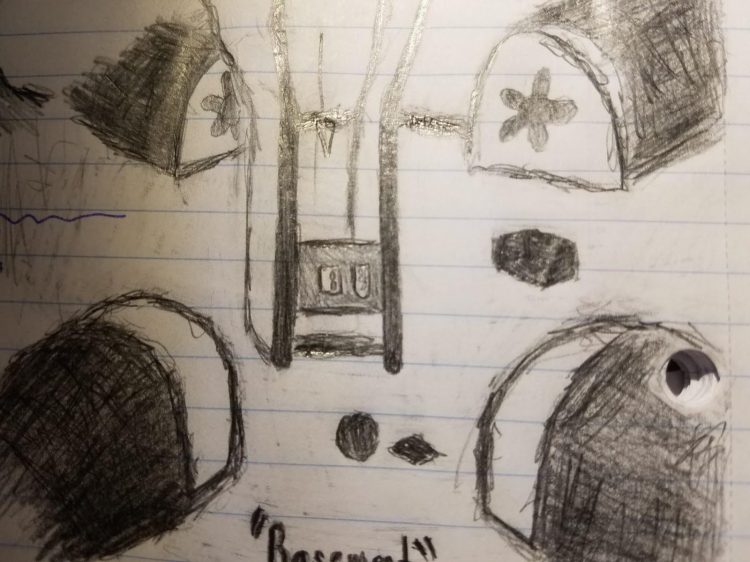


 G.R. Nanda